

David M. Shribman
NATIONAL PERSPECTIVE
CAMBRIDGE, Mass. — The landmark moments in the history of women are well-known and widely recognized: 1848 (the Seneca Falls Convention that challenged the prevailing status of women); 1920 (the ratification of the 19th Amendment, giving women the vote); 1972 (Title IX, banning sex-based discrimination in activities underwritten by the federal government); and 1973 and 2022 (the creation of abortion rights and the overturning of Roe v. Wade).
The one that is forgotten — the one that first liberated and then confined women — is 1868. That’s when the first commercial typewriter was patented.
Once ubiquitous, now an antique, the typewriter took women into the workplace.
It gave women professional status and indispensability, their racing fingers providing the script for the industrial age and the clack of the keys promoting the flowering of mass culture. The typewriter transformed women into instruments of commerce, literature, and law enforcement. It sent high-school girls into typing class while the boys were in shop.
“Considering her vast power, her far-reaching influence, and her strong bargaining position, today’s typewriter operator is entitled to a measure of smug self-satisfaction,” Bruce Bliven Jr. wrote in the 1954 “The Wonderful Writing Machine.” “She belongs to the largest, strongest group of working women in the world.”
Harvard University’s Houghton Library this spring saluted the typewriter and the women who used, and use, them in an exhibit called “Thanks for Typing.” It was a tribute to a machine that helped shape the machine age and a way of communicating that was a halfway house between the Palmer method of cursive writing and the modern word processor.
By 1920, women constituted half of all clerical workers, their tools the steno pad and the typewriter, the result being that those masters of the keyboard earned many times the wages of domestics, factory workers, and department store clerks. Even so, the exhibit points out, “While the typewriter got women out of the house and into the office, many of their responsibilities still mirrored those of a wife and mother.”
The Harvard display also shines a light on films that touch on women at the keyboard, including Frank Capra’s 1941 “Meet John Doe” and Howard Hawks’ 1940 “His Girl Friday.”
“We were drawn to the many stories that were waiting for us in the library,” said Christine Jacobsen, associate curator of modern books and manuscripts at Harvard. “They revealed to us that women typed some of the most extraordinary works of literature in the 20th century.”
They also serve those who type and wait for the next page.
It turns out that Vera Nabokov typed “Lolita,” the most famous work of her husband, Vladimir Nabokov. The typists Mary Weld and Theodora Bosanquet typed the novels of Henry James. The two wives of T.S. Eliot, Vivienne Haigh-Wood Eliot and Valerie Eliot, typed the poet’s works. Sylvia Plath, now far better known than her husband, typed the poems of Ted Hughes.
But the female typists weren’t only the typographers to the famous. Every college dormitory had a woman who typed papers for their dorm neighbors. The Williamsburg, Virginia, violinist Susannah Livingston, eager to make some spending money, typed the papers of her Brown University classmates.
Her husband, the emeritus poet laureate of Virginia, Henry Hart, took typing lessons in high school, wrote his poems in longhand, “and then tried and tried again to type them out.”
Retired Canadian Supreme Court Justice Rosalie Silberman Abella regrets avoiding typing lessons on principle. “I refused to take typing in high school because I didn’t want to be stereotyped,” she said. “I wish I’d taken it. I didn’t know the computer would arrive, and I’d need to know how to type.” She’s now one of the most admired jurists in the world, and still she struggles with her iPhone.
Responding to the #ThanksForTyping movement, which began with a University of Virginia English professor, Bruce Holsinger, and which spawned a conference at Oxford University, the medievalist and cultural historian Juliana Dresvina assembled a series of essays in “Thanks for Typing: Remembering Forgotten Women in History.”
In that volume, Dresvina writes of the “remarkable women who were in danger of being forgotten and erased from history,” the “wives, partners, mothers and other women who laboured in the shadows of their famous husbands or male relatives/employers — academics, men of letters, activists — or who carved out careers of their own yet did not receive the attention they merited.”
Many of those who collect typewriters are women with distinguished careers. One is Jill Abramson, the first female executive editor of The New York Times, who, as a young girl, looked at her older sister’s slim blue Olivetti with envy and who now owns a couple of antique typewriters. Another is the science-fiction writer Mary Robinette Kowal, whose collection includes, among many others, a Smith-Corona Sterling Portable, two Underwoods, an Oliver No. 5, a Blickensderfer No. 8, a Corona No. 3, two Woodstocks of unknown vintage, a 1937 Royal Deluxe, and a 1932 Royal Duotone.
A new biography of the pioneer New Yorker female foreign correspondent, Janet Flanner, published in January, is titled “The Typewriter and the Guillotine.” A Cornell professor battling AI requires her students to do assignments on a typewriter.
As difficult as it may be to consider the typewriter as an instrument of social mobility, for decades it also literally has been a beloved instrument of musical tomfoolery. Many symphony orchestras introduce a grace note at pops or winter holiday concerts by performing “The Typewriter,” which jumps from G major to E minor to C major.
But what’s significant is less the key in which the light-orchestra music that Leroy Anderson — also known for his piece “Sleigh Ride,” with its clop-clop of horses’ hoofs bouncing off radio speakers every year between Thanksgiving and New Year’s Day — wrote than the actual use of the keys of an on-stage typewriter that acts as a percussion instrument.
The Pittsburgh Symphony Orchestra sometimes programs “The Typewriter” for Thanksgiving concerts, but it is astonishing in the era of the laptop and iPad that it’s played at all.
“Our audiences are old enough that they know what a typewriter is,” said Melia Peters Tourangeau, president of the ensemble. “The younger people know what it is, but they don’t know how it works. To them, it’s kind of like a rotary telephone. They see them but wouldn’t know how to use them.”
But their mothers and grandmothers did know how to use them.
A Swampscott High School Class of 1972 member, David M. Shribman is the Pulitzer Prize-winning former executive editor of the Pittsburgh Post-Gazette.
The post Shribman: Typecast appeared first on Itemlive.
24World Media does not take any responsibility of the information you see on this page. The content this page contains is from independent third-party content provider. If you have any concerns regarding the content, please free to write us here: contact@24worldmedia.com
David M. Shribman NATIONAL PERSPECTIVE CAMBRIDGE, Mass. — The landmark moments in the history of women...
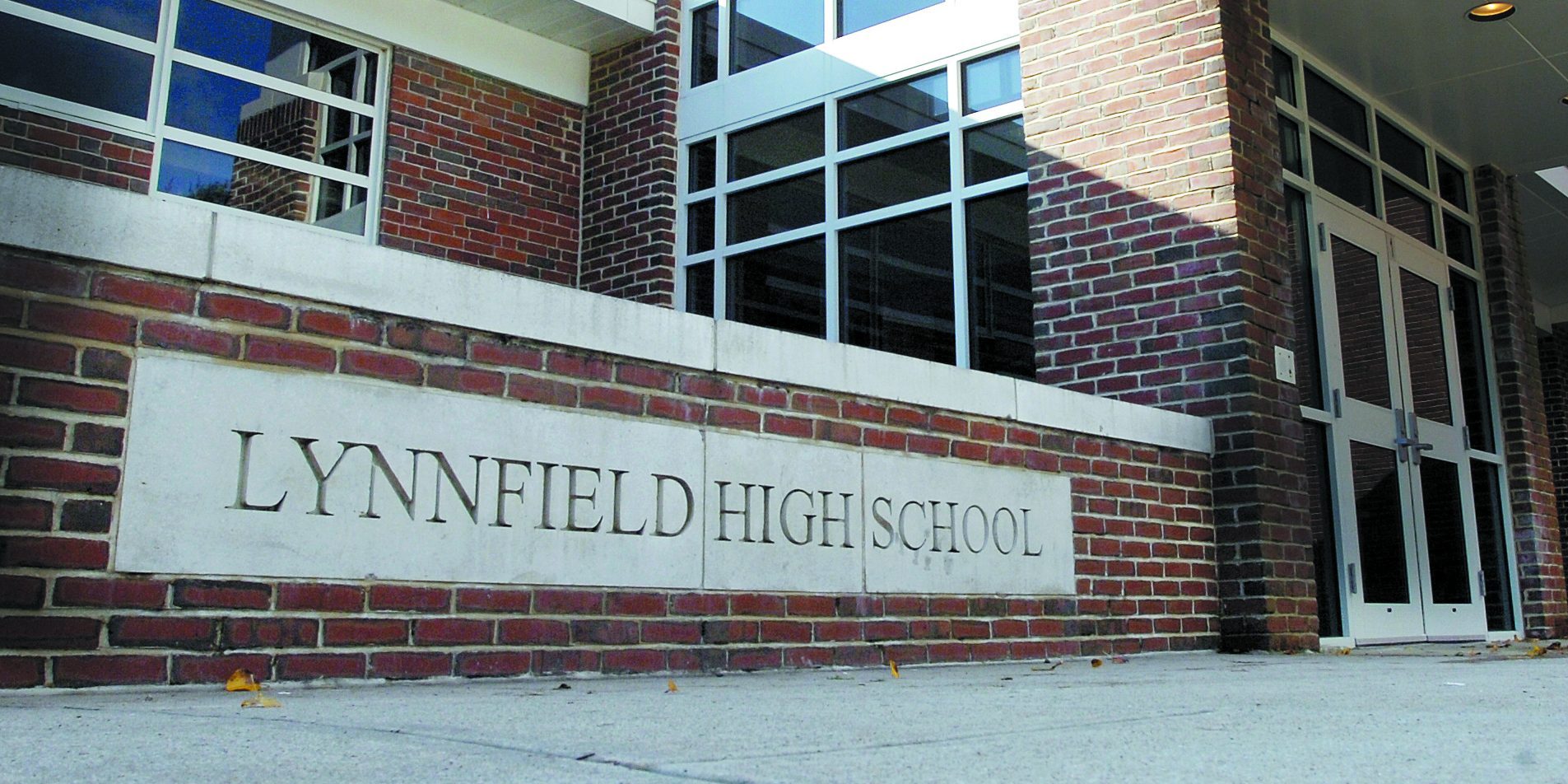
LYNNFIELD — A racial slur was found written on the bathroom stall door at Lynnfield High School on...
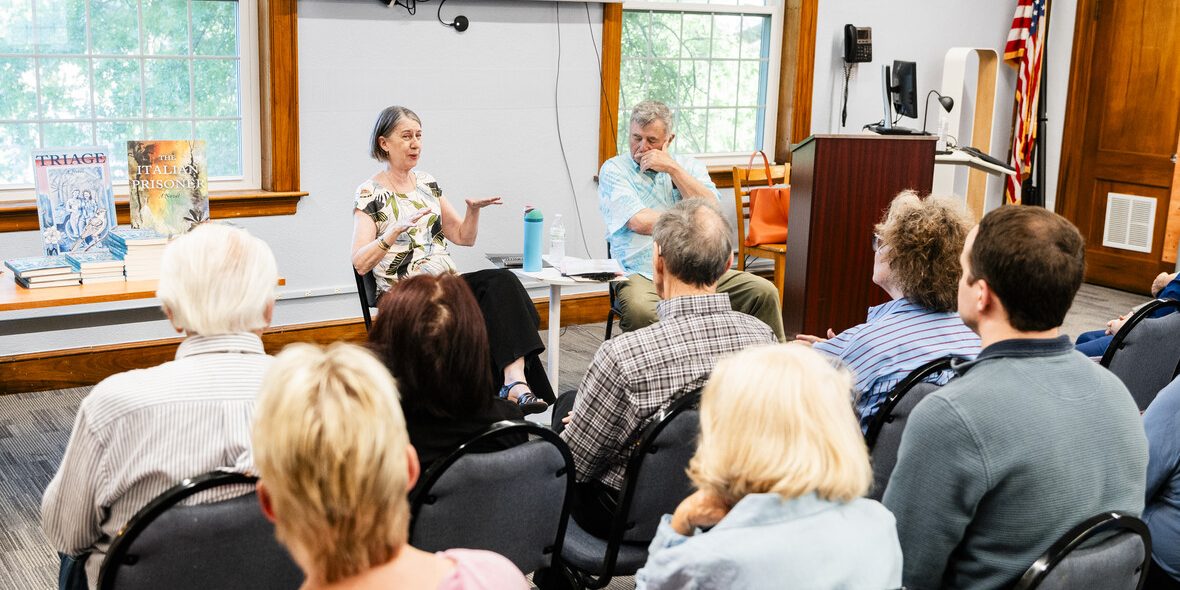
SWAMPSCOTT — Local author Elisa Speranza’s latest novel shines a light on a group she believes...
Brakeyshia Samms On June 19, 1865, enslaved people in Texas belatedly learned that they were free, an...
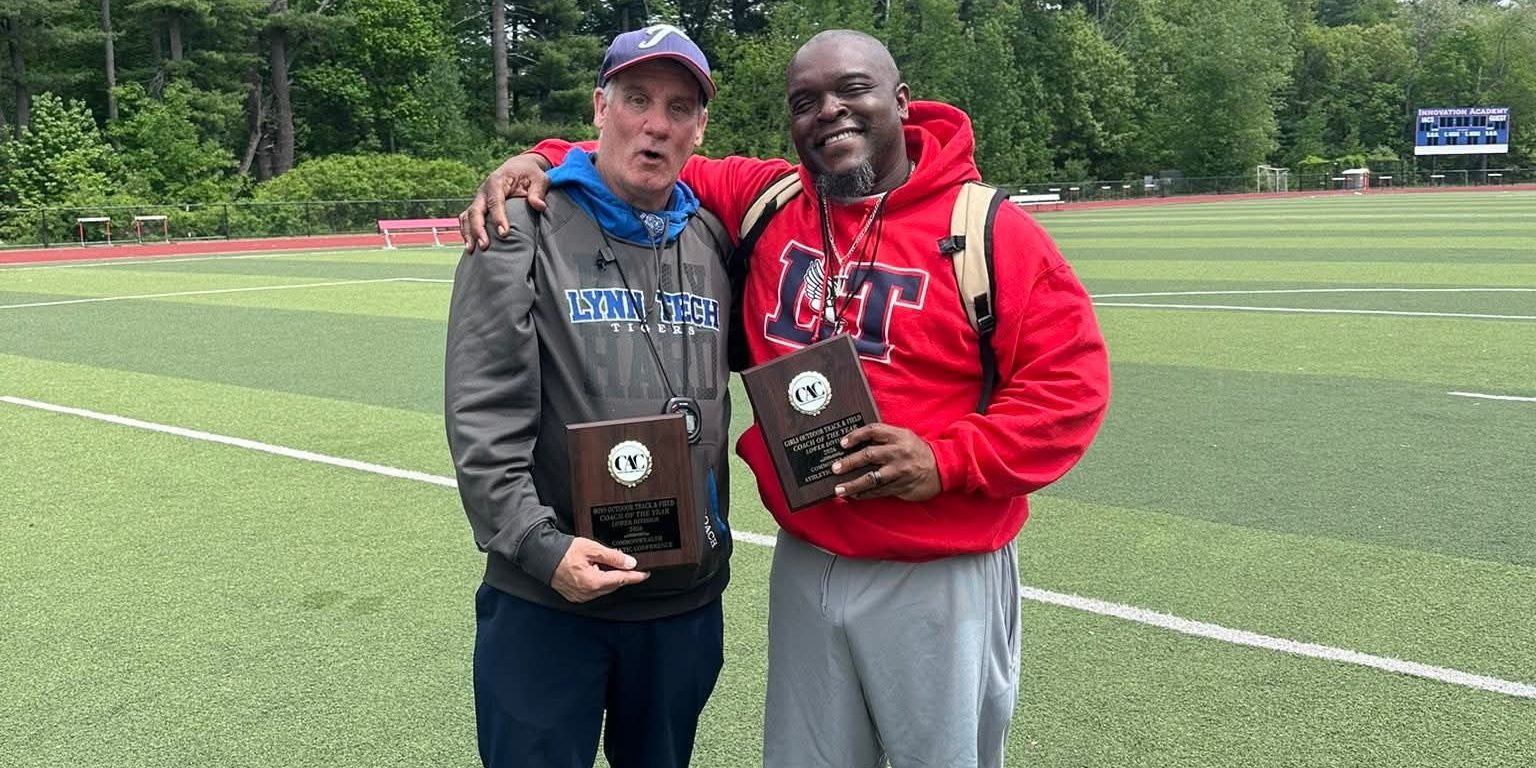
LYNN — The Lynn Tech boys and girls track and field teams delivered outstanding seasons, led by boys...
To the editor: I am writing to express my support for Zosia VanMeter in the upcoming election for the 9th...
Southold seeks $500K grant for long-awaited Orient waterway upgrades
Northeastern Conference tennis awards – Itemlive

Krause: Every dog has its day
130 runners take on Lynn Woods

Greenport Fire Department memorial service set for Sunday
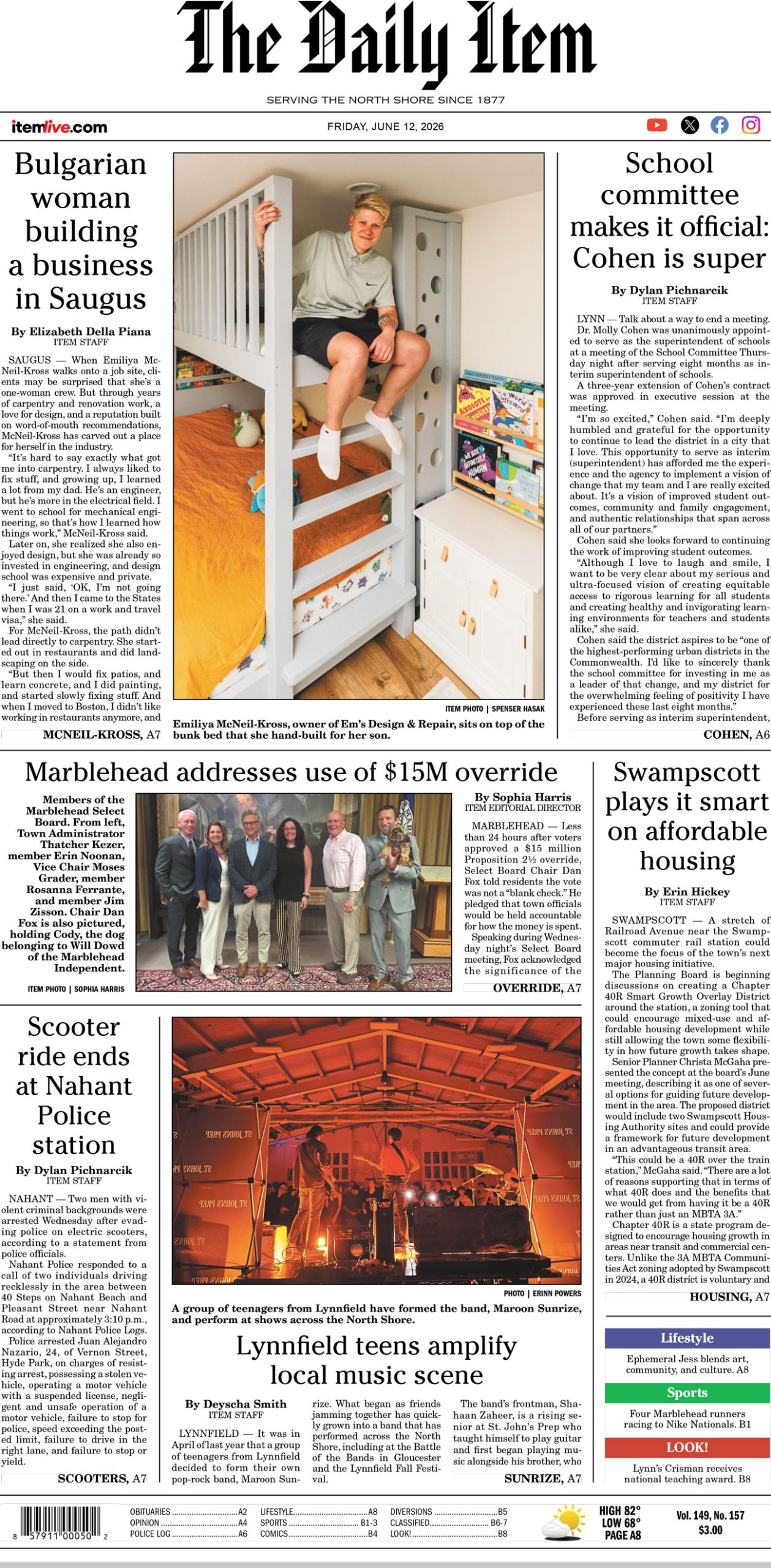
Today’s page 1: 6-12-26
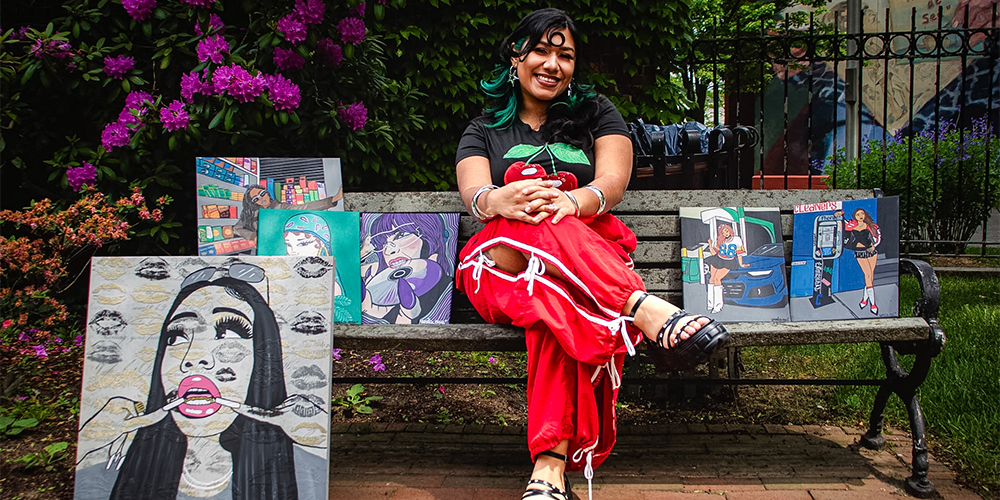
Lynn’s Ephemeral Jess blends art, community, and culture
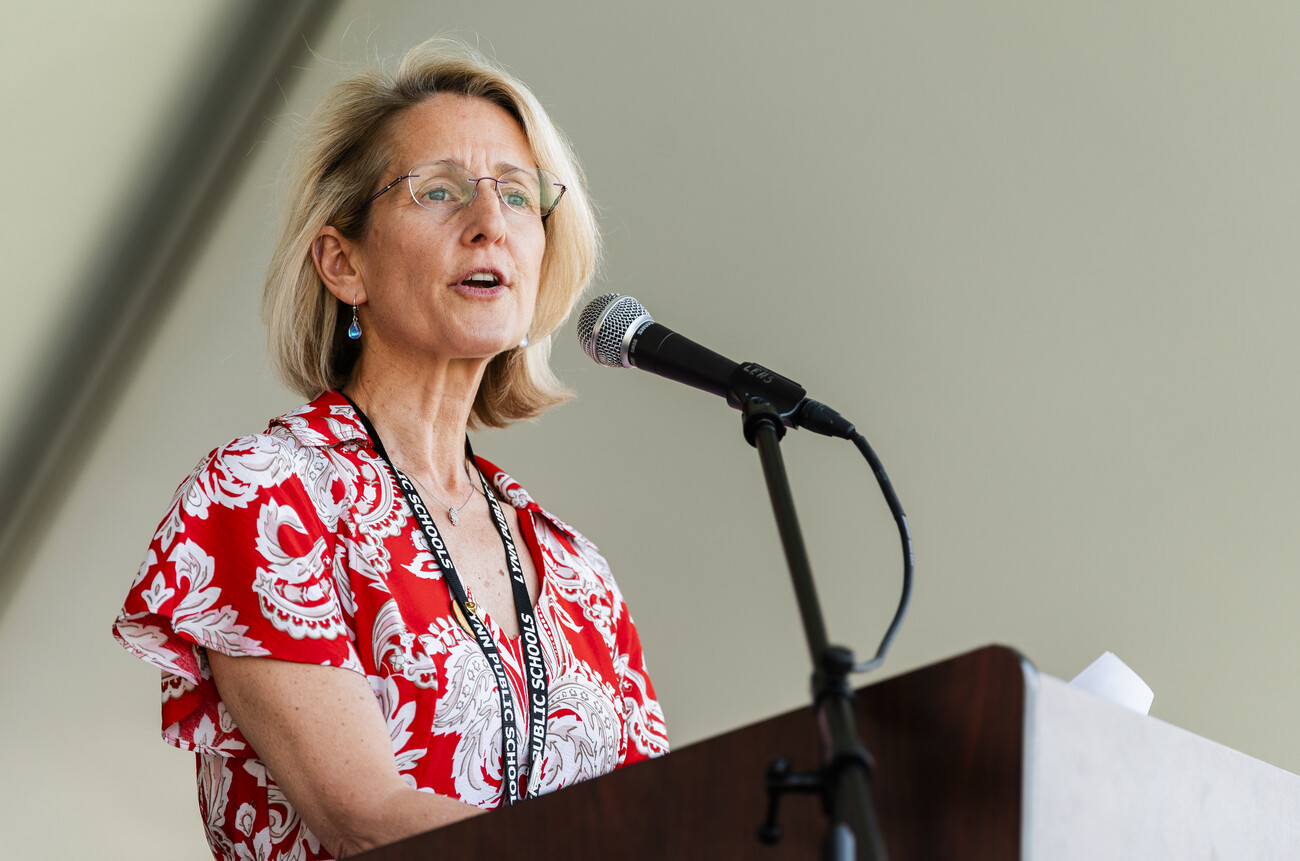
School Commitee makes it official: Cohen is super
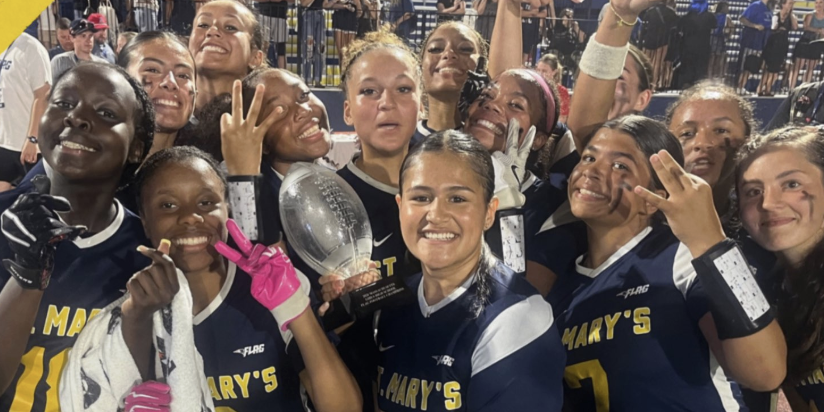
St. Mary’s, 18-0, stands alone for third straight season
VFW to host America’s 250th Celebration
LTTE: Local representatives ignored voters on legislative audits
Bulgarian woman building a business in Saugus