As the nation prepares to mark the 250th anniversary of American independence, more than 60 community members gathered Thursday to read aloud Frederick Douglass’ famed 1852 speech, “What to the Slave is the Fourth of July?” — reflecting on both the nation’s founding ideals and the commitment to them that many said remains unfinished.
The annual Reading Frederick Douglass Together event, moved from Town Hall Lawn to the air conditioned auditorium at Swampscott High School, was organized by the Swampscott Historical Commission and Nahant Historical Society in partnership with the Swampscott Recreation Department, S.U.R.E. Diversity, and the Swampscott Public Library. Residents of all ages took turns reading an abridged version of Douglass’ famous address, bookended by speakers and a community discussion.
Attorney General Andrea Joy Campbell, who read the opening passage of the speech, said Douglass’ words continue to resonate more than 170 years after they were first delivered.
“’What to the Slave Is the Fourth of July?’ feels more urgent than ever,” Campbell said. “And it’s not just because we’re in a time when folks are seeking to not only wipe out our history, but to almost eradicate it.”
Campbell said the speech and Douglass’ focus on Black Americans’ experience at that time underscores the importance of teaching the nation’s full history, arguing that understanding both its triumphs and failures is essential to preserving the country’s democratic ideals.
“If we don’t teach it, we won’t learn from it,” Campbell said. “And we will, of course, repeat the past.”
She pointed to current challenges that American immigrants are facing as an example of the questions Douglass raised that are continuing to confront the nation. Referring to the treatment of Haitian immigrants and other newcomers, Campbell urged attendees to consider one of the central questions she believes Douglass’ speech still poses today.
“The very heart of what Frederick Douglass and many others wanted us to ask … [is] ‘Who is this country for? Who gets to decide who this is for?’” Campbell said. “And right now, that’s a question all of us have to ask.”
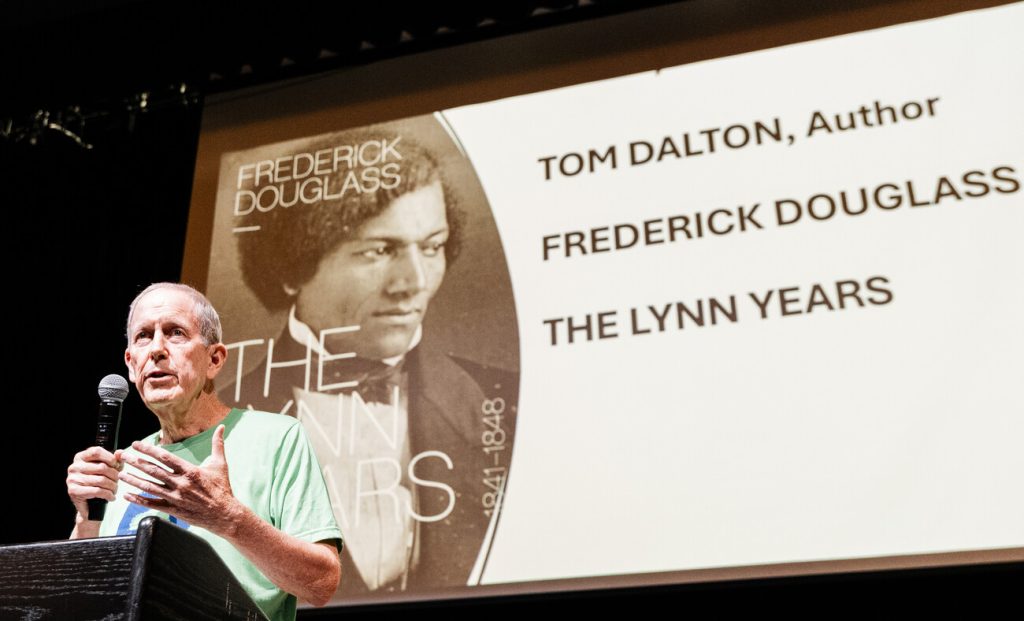
Author Tom Dalton, whose book “Frederick Douglass: The Lynn Years” chronicles the abolitionist’s time in the North Shore, said Douglass’ years in Lynn were a period of transition, in which he wrote his first autobiography: “Narrative of the Life of Frederick Douglass, an American Slave.”
That autobiography detailed the horrendous treatment of slaves by prominent community figures like Colonel Edward Lloyd, the former Maryland governor and U.S. senator on whose plantation Douglass was born. It is still regarded as one of the most important American history books of all time, and catapulted Douglass into wide recognition among abolitionists.
“The Yale historian David Blight … said after the publication of the narrative, Frederick Douglass in time became the most famous Black person in the world,” Dalton said. “Well, it’s amazing to think: This was your town. The most famous Black person in the world, in your town.”
Swampscott poet Enzo Surin urged attendees to view the reading not simply as a remembrance of history, but as an opportunity to examine the nation’s present.
“His speech wasn’t simply an indictment of his moment,” Surin said. “It was an invitation, and perhaps a challenge, to every generation.”
With the nation’s 250th anniversary approaching, Surin said anniversaries should prompt reflection on the country’s future as much as its past.
“Anniversaries are not only opportunities to look backwards,” he said. “They are invitations to ask who we are becoming.”
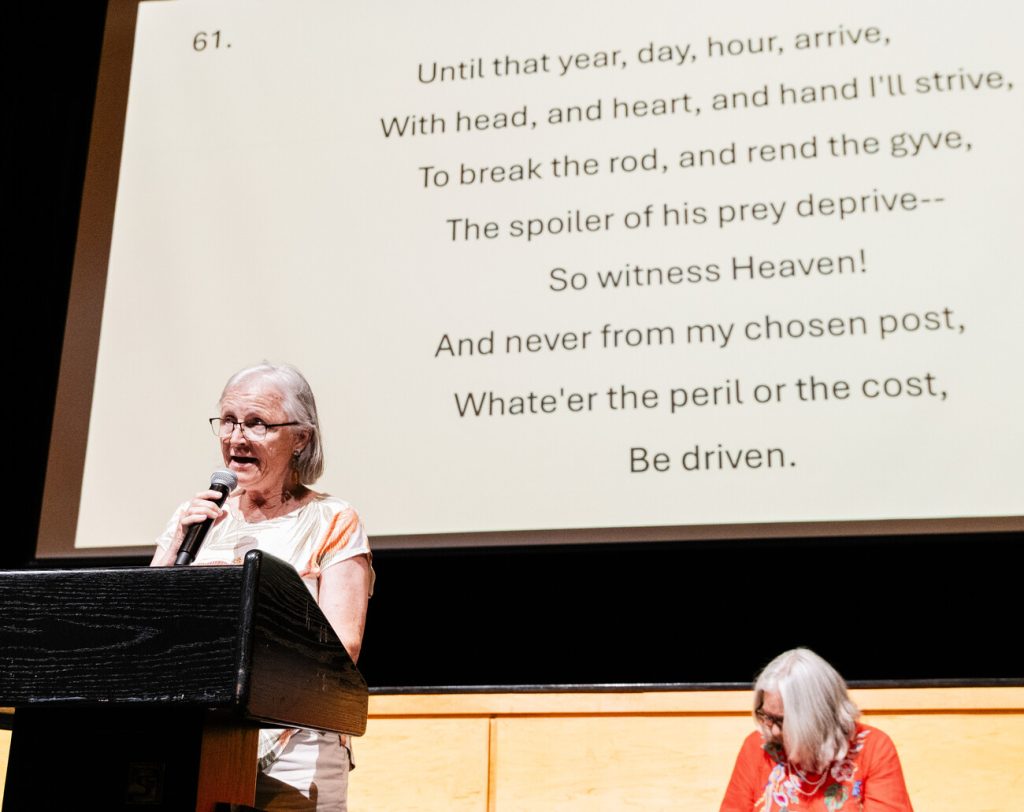
Following the opening remarks, more than 60 residents, students, elected officials, and community leaders took turns reading an abridged version of the speech. One after another, readers stepped to the podium to deliver passages that challenged listeners to consider whether the nation had fully lived up to the ideals it celebrates each Independence Day, including Douglass’ reminder that “the blessings in which you, this day, rejoice, are not enjoyed in common.”
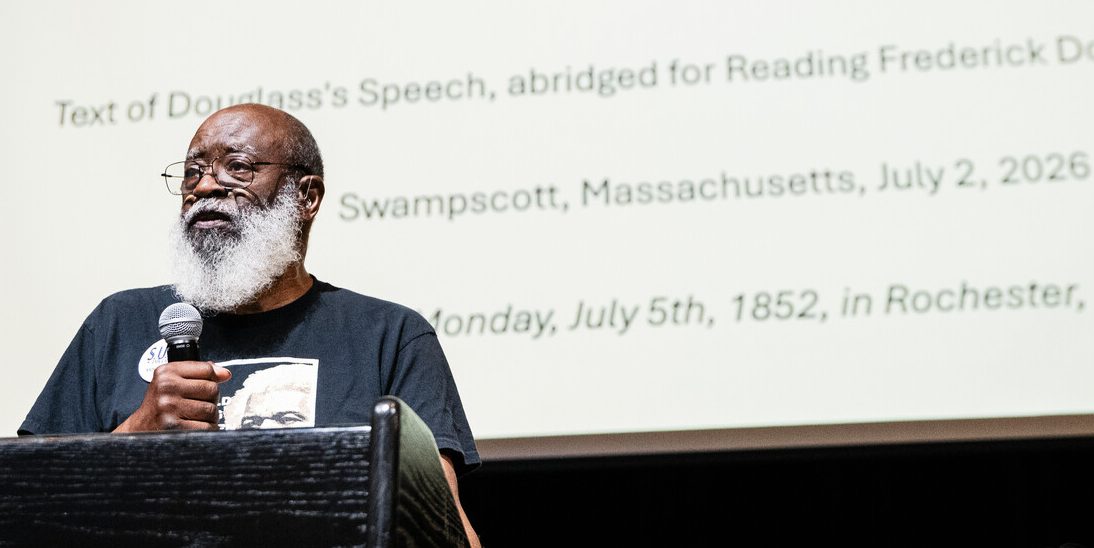
Closing the reading, S.U.R.E. Diversity member Ralph Edwards encouraged participants to continue the conversation sparked by Douglass’ words.
“So much of what he was concerned of is facing us again today,” Edwards said. “We can come together. Probably a part of this is just talking to each other.”
Edwards said he hopes future readings bring even more families together, recalling that hearing children read Douglass’ words was one of the afternoon’s highlights and something the community should continue to build upon.
“Let’s go forth, and as Douglass would always say,” Edwards said. “Agitate, agitate, agitate.”
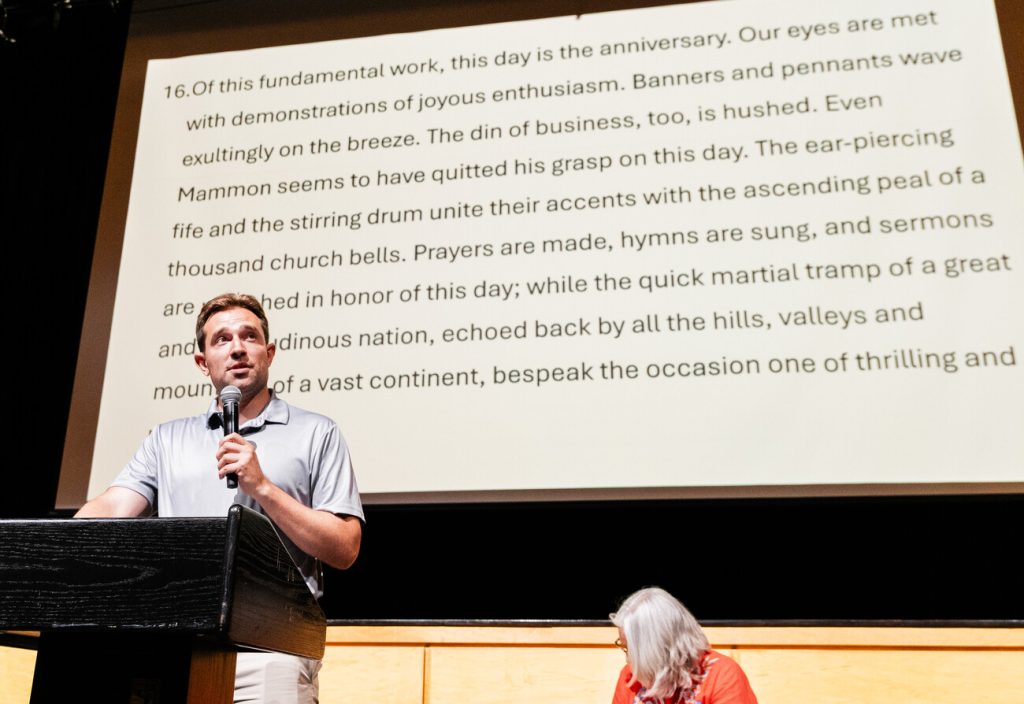
Writer Tom Dalton, of Lynnfield, gives a brief insight into Frederick Douglass’ time spent in Lynn as he speaks during Swampscott’s community reading of Douglass’ speech, “What to the Slave Is the Fourth of July.”
Enzo Silon Surin speaks before the community reading of Frederick Douglass’ speech, “What to the Slave Is the Fourth of July?,” in Swampscott on Thursday.
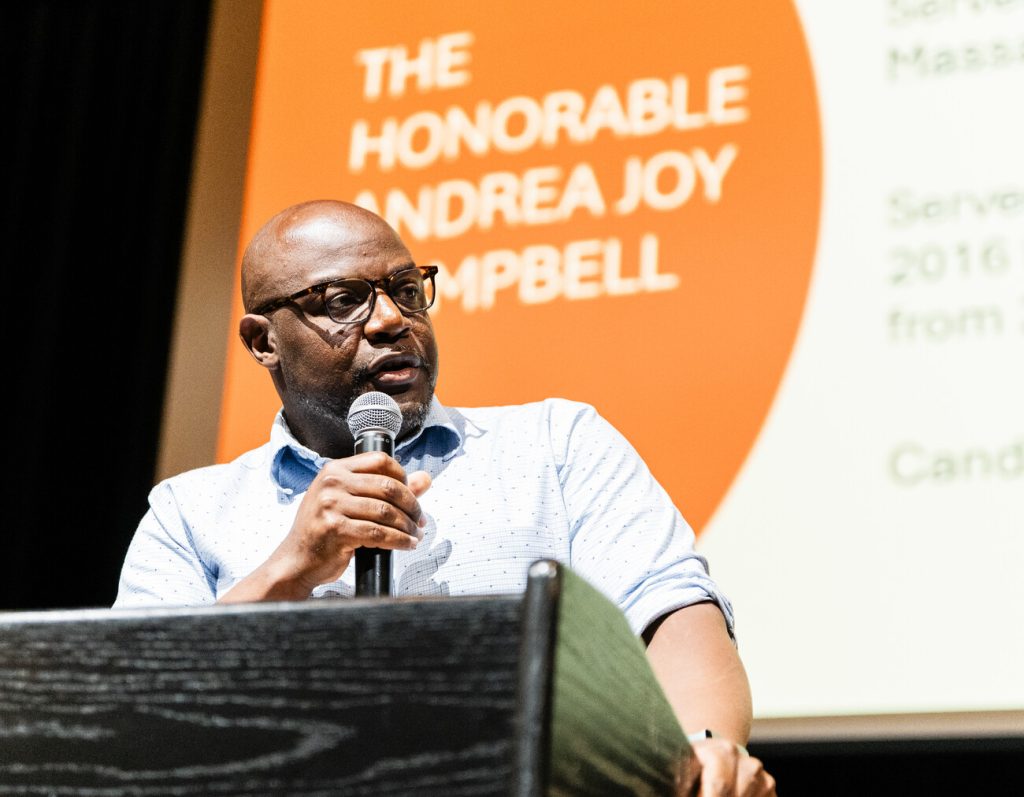
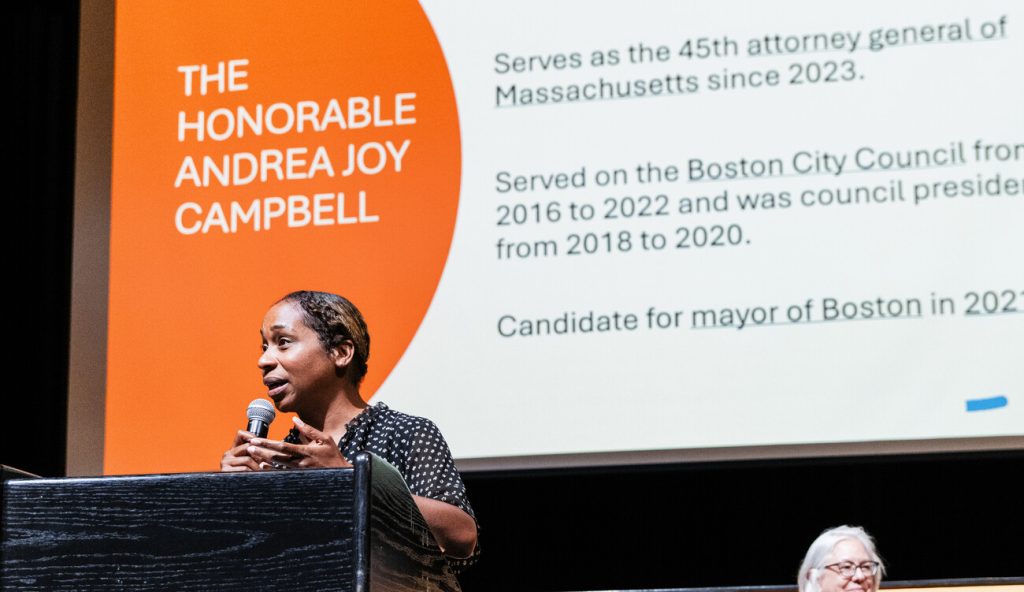
Massachusetts Attorney General Andrea Joy Campbell speaks before the community reading of Frederick Douglass’ speech, “What to the Slave Is the Fourth of July?,” in Swampscott on Thursday.
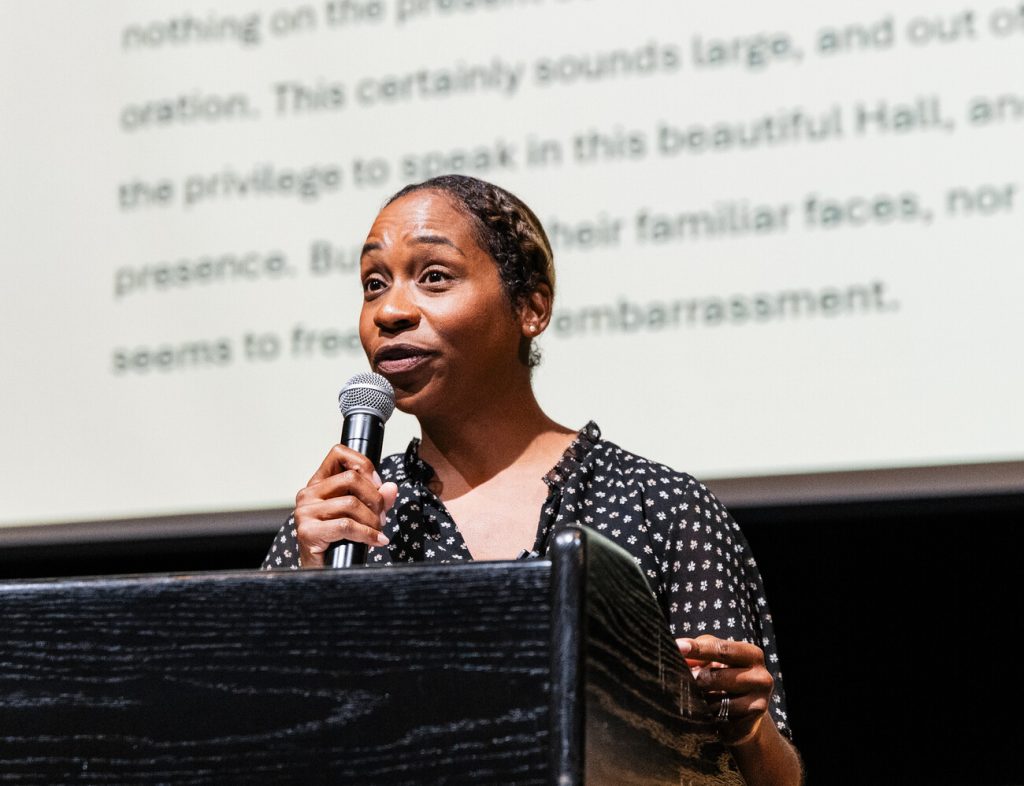
Massachusetts Attorney General Andrea Joy Campbell reads a passage from Frederick Douglass’ speech, “What to the Slave Is the Fourth of July,” during the community reading at Swampscott High on Thursday.
Lynn School Committee member Tristan Smith reads a passage from Frederick Douglass’ speech, “What to the Slave Is the Fourth of July,” during the community reading at Swampscott High on Thursday.
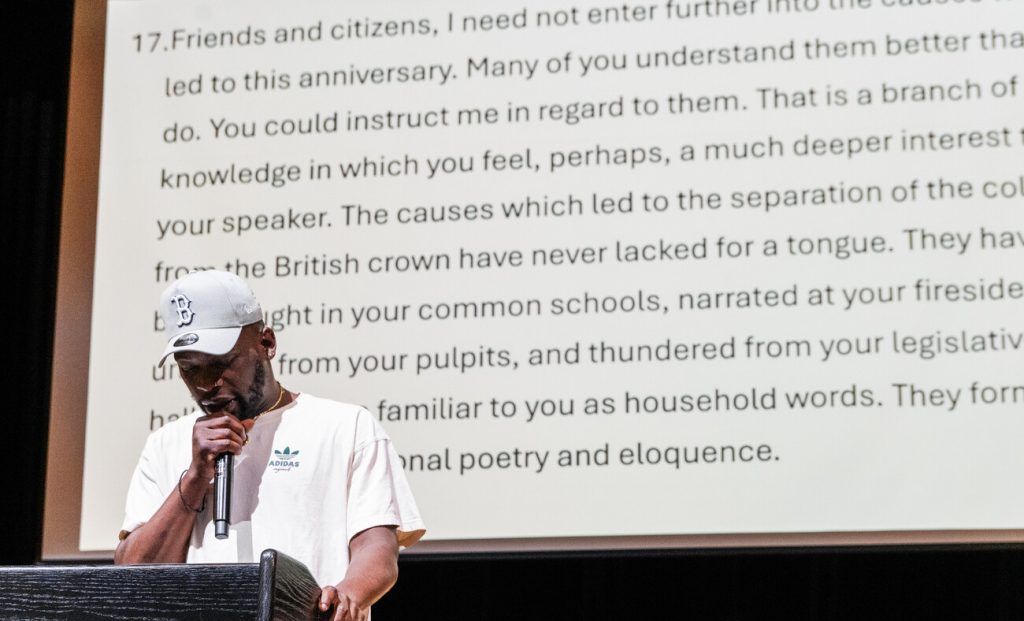
Temi Bailey reads a passage from Frederick Douglass’ speech, “What to the Slave Is the Fourth of July,” during the community reading at Swampscott High on Thursday.
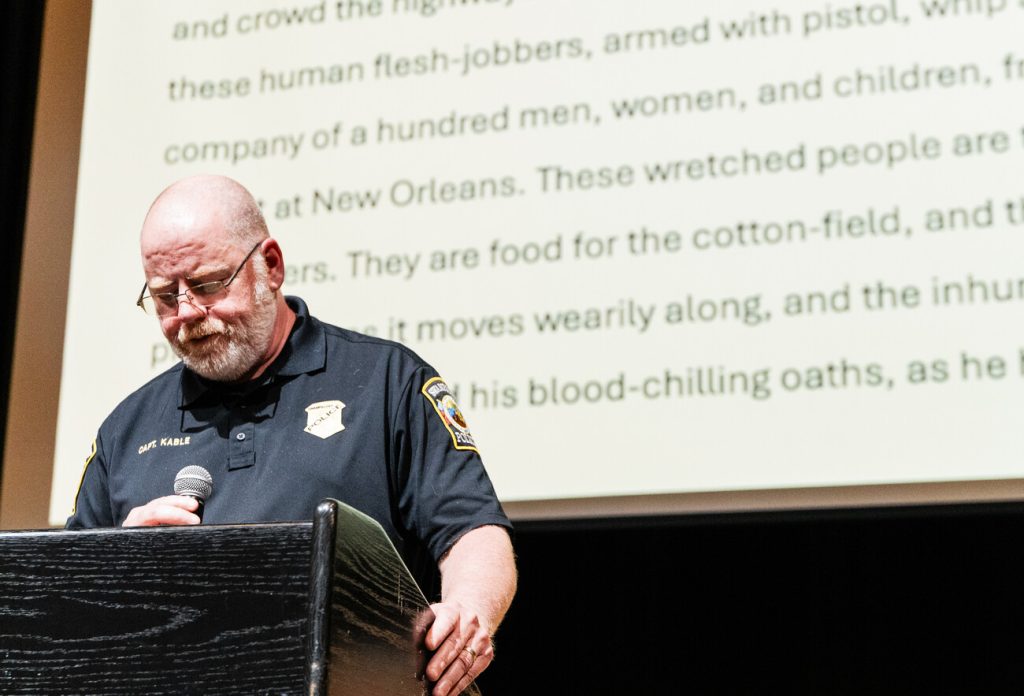
Swampscott Police Capt. Joe Kable reads a passage from Frederick Douglass’ speech, “What to the Slave Is the Fourth of July,” during the community reading at Swampscott High on Thursday.
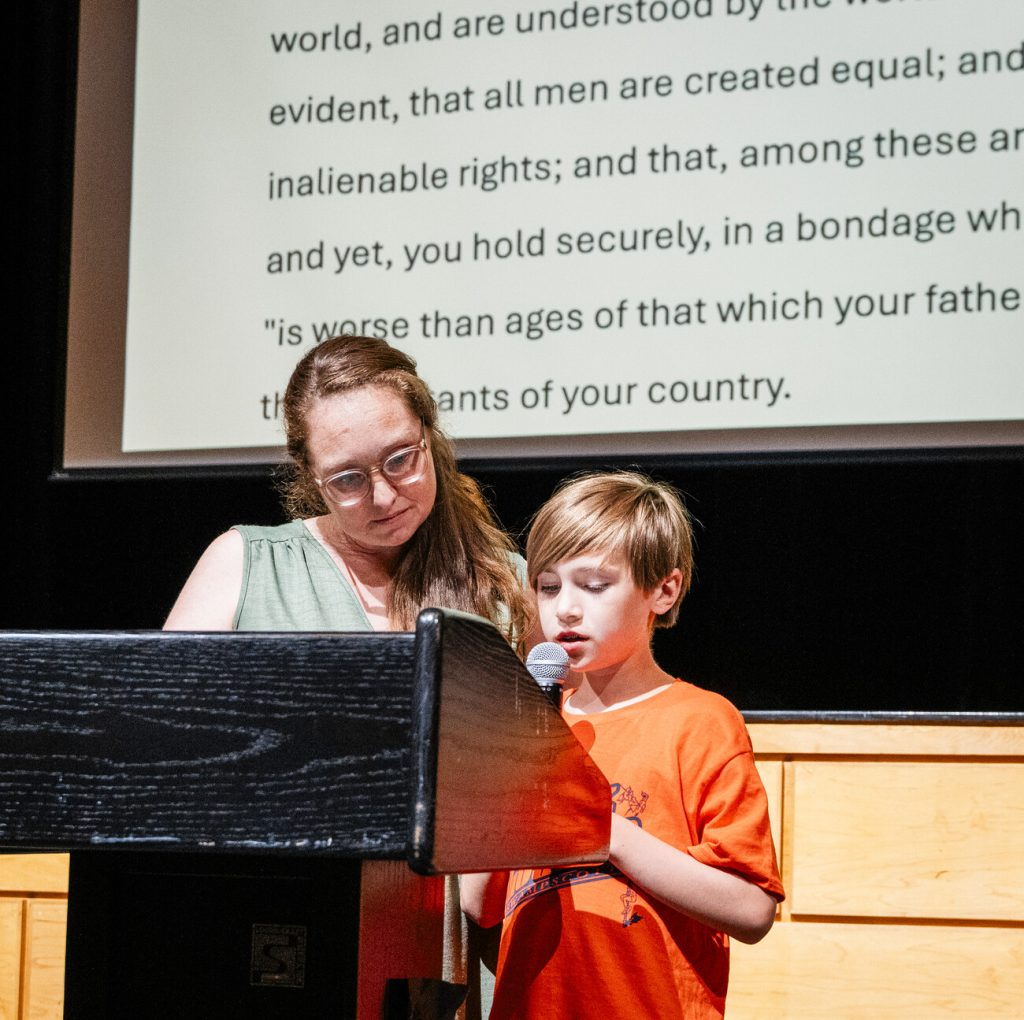
Emmett Muñoz reads a passage from Frederick Douglass’ speech, “What to the Slave Is the Fourth of July,” with his mom, Sierra, during the community reading at Swampscott High on Thursday.
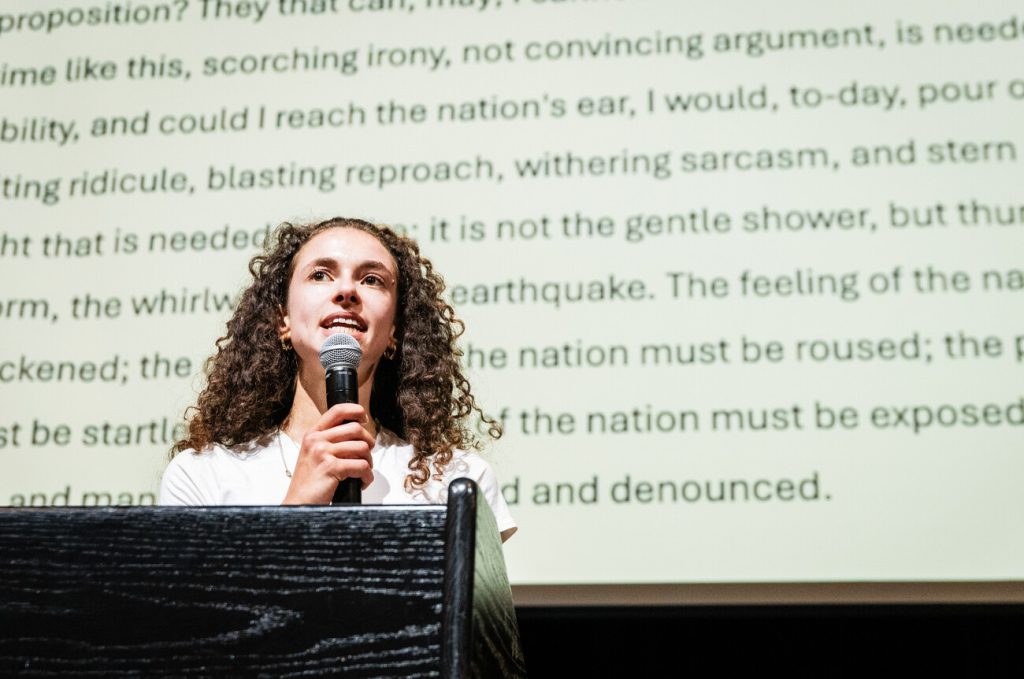
Liora Ragozin passionately reads a passage from Frederick Douglass’ speech, “What to the Slave Is the Fourth of July,” during the community reading at Swampscott High on Thursday.
Nahant HIstorical Society Executive Director Julie Tarmy reads a passage from Frederick Douglass’ speech, “What to the Slave Is the Fourth of July,” during the community reading at Swampscott High on Thursday.
24World Media does not take any responsibility of the information you see on this page. The content this page contains is from independent third-party content provider. If you have any concerns regarding the content, please free to write us here: contact@24worldmedia.com
As the nation prepares to mark the 250th anniversary of American independence, more than 60 community...
PEABODY — Visitors to the Peabody Historical Society’s newest exhibit, located at 33 Washington St.,...
LYNNFIELD — A survey conducted by the DAPA Research Inc., of Lynnfield, has found that, of 500...
SAUGUS — As the Saugus School Committee continues its deep dive into spending, the athletic account has...
LYNN — Superintendent of Schools Dr. Molly Cohen has appointed Stephanie Clayman principal of Ingalls...
LYNN — The Friends of Lynn Council on Aging has continued to support seniors in the community for more...
North Fork melts under holiday heat wave

Built in Lynn, ROOTed in community
Lynnfield’s Newhall Park gets another facelift

Rabbitt begins his next football chapter

Commentary: This July 4, let us rededicate ourselves to protecting our elections
Commentary: Homelessness just declined in the U.S. Trump’s plans will take us backward.
North Fork Fourth of July festivities

Joey Barrett: Celtics are green, not Brown

Hersh Goldman: Jewish fasts of the 2026 heat wave and of the 1848 Cholera
Mattituck-Cutchogue graduates told they are ‘Tuckers for life’
Southold graduates urged to keep learning, embrace failure
Graduation 2026: Greenport tosses its caps