

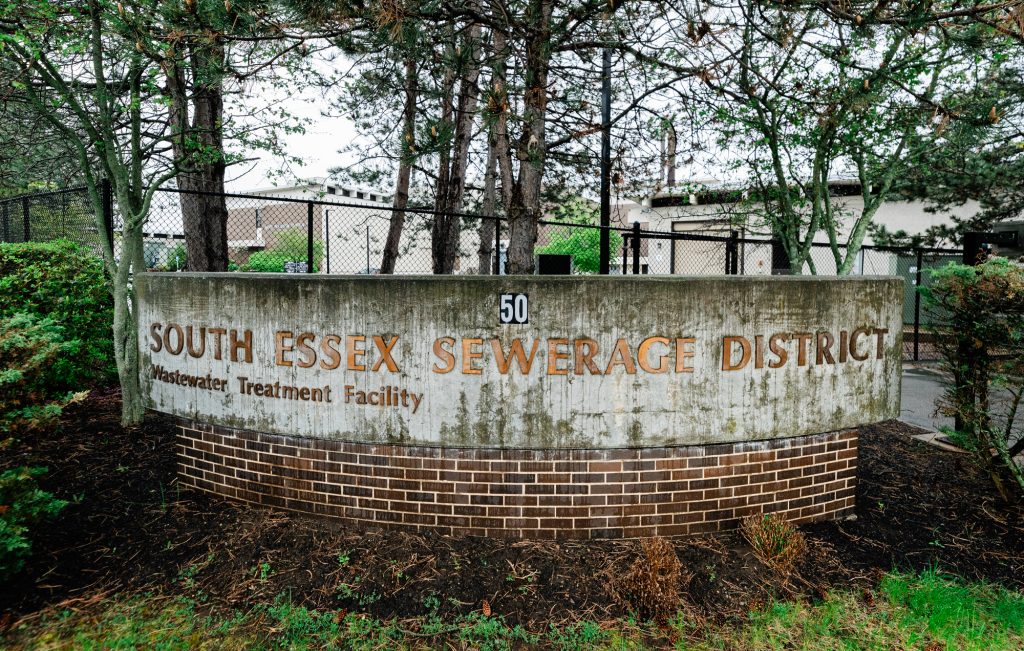
MARBLEHEAD — Residents are expected to see sewer rate increases in the coming years as the South Essex Sewerage District confronts rising operating costs and nearly $390 million in infrastructure upgrades.
However, Marblehead officials say the town is better positioned than many neighboring communities because it invested heavily in sewer infrastructure more than a decade ago.
Representatives from SESD said Wednesday that residents could see sewer bills increase by roughly 8% to 10% annually as the district seeks relief from Massachusetts’ Proposition 2½ spending limits and prepares for major capital improvements.
Director of Public Works Amy McHugh said Marblehead is in a stronger position because the town recently paid off a major sewer pipeline replacement project completed in 2015.
“We do have a better story,” McHugh said, explaining that Marblehead’s earlier investments now allow the town to better balance future district costs alongside local infrastructure projects.
“When you do the math, it’s not as bad as it sounds,” Water & Sewer Commission member Barton Hyte said. “It’s not going to be hundreds of dollars a month.”
The South Essex Sewerage District provides sewer conveyance and wastewater treatment services for Marblehead, Salem, Beverly, Danvers, Peabody, portions of Middleton, and state facilities in Wenham, serving approximately 190,000 residents.
SESD Board Chairman Mike Parsons said rising sludge disposal costs and aging infrastructure are creating financial pressures that the district says can no longer be managed under Proposition 2½.
“This isn’t an FY28 problem only,” Parsons said. “It starts next year, but it will continue into the future unless we get relief from Proposition 2½.”
To address those pressures, SESD is seeking special legislation that would raise its non-exempt budget ceiling beginning in FY28, allow annual increases of 2.5% moving forward, authorize up to $390 million in borrowing for the first decade of capital projects, remove the district’s $2 million stabilization fund cap, and modernize outdated portions of its governing legislation.
SESD officials are continuing presentations before local boards and legislative bodies in hopes of securing support resolutions before filing legislation with state lawmakers by July.
Parsons said one of the district’s largest financial pressures involves wastewater residuals, the solid byproducts generated during treatment.
For years, SESD benefited from a long-term disposal contract tied to the consumer price index. But that agreement expires after FY27 as PFAS-related disposal restrictions tighten across the Northeast.
Parsons said states such as Maine have already begun restricting sludge disposal because of PFAS concerns, reducing disposal options and driving up costs.
“We currently pay about $4.5 million a year for residuals hauling and disposal,” Parsons said. “We see that number increasing by $1.5 million to $2 million next year.”
Executive Director David Michelsen said engineers are testing newer technologies, including centrifuges and screw presses, that could reduce the amount of material requiring disposal.
“We had two centrifuge vendors last month, and we had one screw press in and another one coming in in late May,” Michelsen said.
Parsons acknowledged the newer systems may improve efficiency, but said they will not eliminate rising disposal costs.
He also noted that many systems at the treatment plant are now more than 30 years old, while some major pipelines are more than 50 years old.
“Essentially, all the mechanical equipment is beyond its useful life,” Parsons said. “It’s a challenge to get replacement parts if we can find them.”
McHugh said Marblehead has structured its long-term capital planning around anticipated SESD increases, allowing the town to stabilize sewer rates by balancing local projects against future district spending.
Officials repeatedly emphasized that delaying infrastructure upgrades would ultimately create higher costs and greater risks.
“You fix the immediate problem, solve whatever release there was, and then you go about replacing it anyway,” Parsons said. “You paid more than you need to if you can do it logically.”
Resident Sarah Fox, attending remotely, praised the district and town officials for taking a proactive approach.
“As a taxpayer and a resident, I’m really grateful for that forward thinking,” Fox said. “It’s a pay now or pay later proposition.”
Potential consequences include deferred maintenance, equipment failures, permit violations, and possible federal enforcement tied to wastewater discharge standards, if this does not pass.
State representatives would like the affected communities to support this legislation, but it’s not required in order for SESD to file. SESD plans to continue presentations in all five member communities before finalizing proposed legislation and formally filing it with state lawmakers.
24World Media does not take any responsibility of the information you see on this page. The content this page contains is from independent third-party content provider. If you have any concerns regarding the content, please free to write us here: contact@24worldmedia.com

A day full of hands-on activity, history and lots of artisanal shopping is in store at Hallockville...

LYNN — Construction of the new Pickering Middle School continues to move steadily forward, with the...

LYNN — Beyond Walls, a nonprofit organization working to transform and uplift communities through...

Rain or shine, it was the same mission for Peabody’s girls lacrosse team Thursday: go to Medford High...
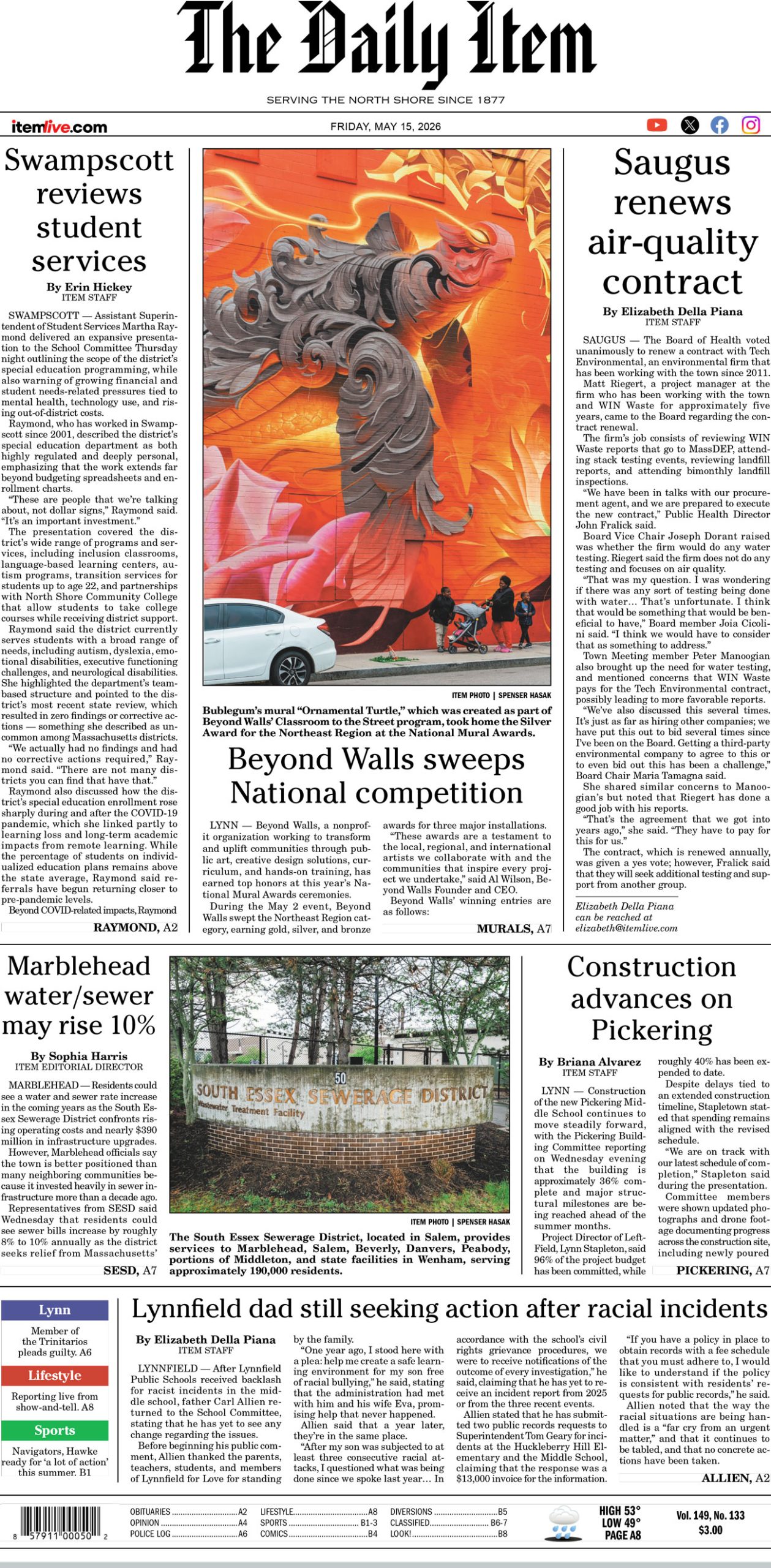
The post Today’s page 1: 5-15-26 appeared first on Itemlive. Source...

E.J. Antoni Think you own that new car you just bought? Not all of it. As many Americans are learning,...
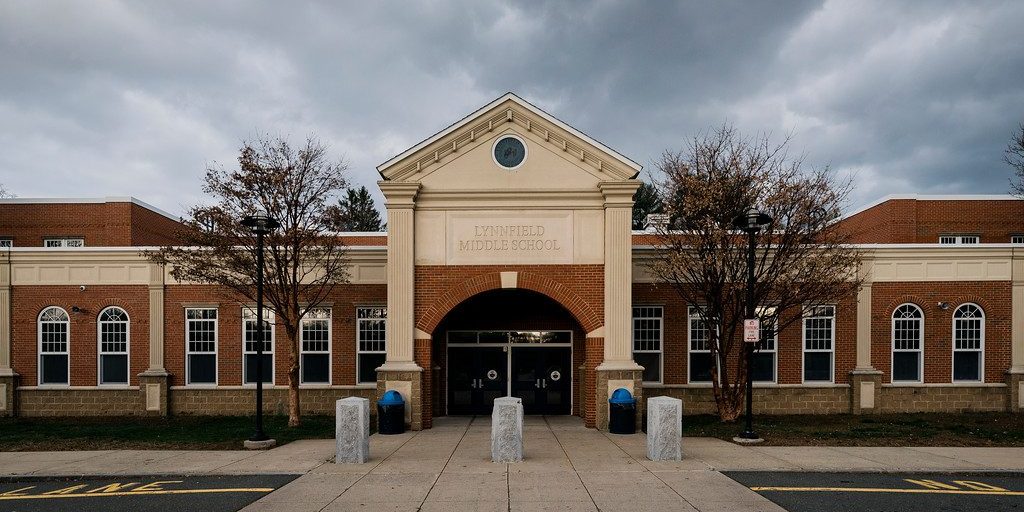
Lynnfield dad still seeking action after racial incidents
Swampscott reviews student services – Itemlive

Commentary: Noah Kahan shows how common, and harmful, a delayed OCD diagnosis is

Reporting live from show-and-tell – Itemlive

Police Logs: May 13, 2026
Saugus renews air-quality contract – Itemlive

Lynn Chapter of the Trinitarios member pleads guilty to racketeering conspiracy
Joint investigation leads to arrests, drug bust
Marblehead water/sewer may rise 10%

College signings, monthly honors highlight Fenwick’s busy spring

Navigators, Hawke ready for ‘a lot of action’ this summer

Community Calendar of Events: May 14, 2026