

MARBLEHEAD — The Marblehead Board of Health is considering a regulation that would prohibit the sale, manufacture and distribution of kratom products, citing concerns about public health and the growing availability of products that are largely unregulated.
The draft regulation, which the board discussed at Tuesday night’s meeting, would ban both natural leaf kratom and synthetically derived kratom products, along with synthetic cannabinoids such as delta-8 and delta-10 THC and other “unregulated novel intoxicating products.”
According to the proposal, the regulation is intended to reduce access to products the board says may present health risks because they are often sold without consistent labeling, dosage information, or ingredient transparency.
The proposal defines natural leaf kratom as leaves from the Mitragyna speciosa plant that have not been chemically altered or mixed with other ingredients. It separately defines synthetically derived kratom as products whose alkaloids have been artificially increased through chemical synthesis or concentrated beyond naturally occurring levels.
During the meeting, board members discussed whether kratom products are currently sold in Marblehead.
When asked whether the products could be found at local retailers, Public Health Director Andrew Petty said tobacco inspectors regularly visit stores but are not specifically inspecting for kratom because it is currently legal.
“They are looking for this product, but it’s not the products that they’re going after,” Petty said.
When asked whether kratom could legally be sold in town under current regulations, Petty said he would need to review existing state law.
“I’d have to take a look exactly what the law is because the Division of Agriculture does have some regulations on certain things,” he said.
Petty added that while there are places where the products could legally be sold, he did not believe they are currently available in Marblehead, though he did not say that definitively.
Board member Tom McMahon cautioned that kratom can be used to help manage opioid dependency and chronic pain management.
He added that although he did not have all of the information, he cautioned board members that taking away the substance may push people to consume more dangerous drugs.
Petty said that surrounding communities have already banned the substance, including Beverly, Salem, Saugus, and Peabody.
If adopted, violations of the regulation would carry escalating penalties. A first violation would result in a $1,000 fine. A second violation within 36 months would carry another $1,000 fine and a seven-business-day suspension of any Board of Health-issued permit. A third violation would result in another $1,000 fine and a 30-business-day permit suspension. After a fourth violation within 36 months, the board could permanently revoke a permit following a public hearing.
The draft also allows the Board of Health to suspend or revoke permits immediately following a hearing if it determines a violation has occurred.
The proposal exempts cannabis products sold through state-licensed medical and adult-use dispensaries regulated by the Massachusetts Cannabis Control Commission.
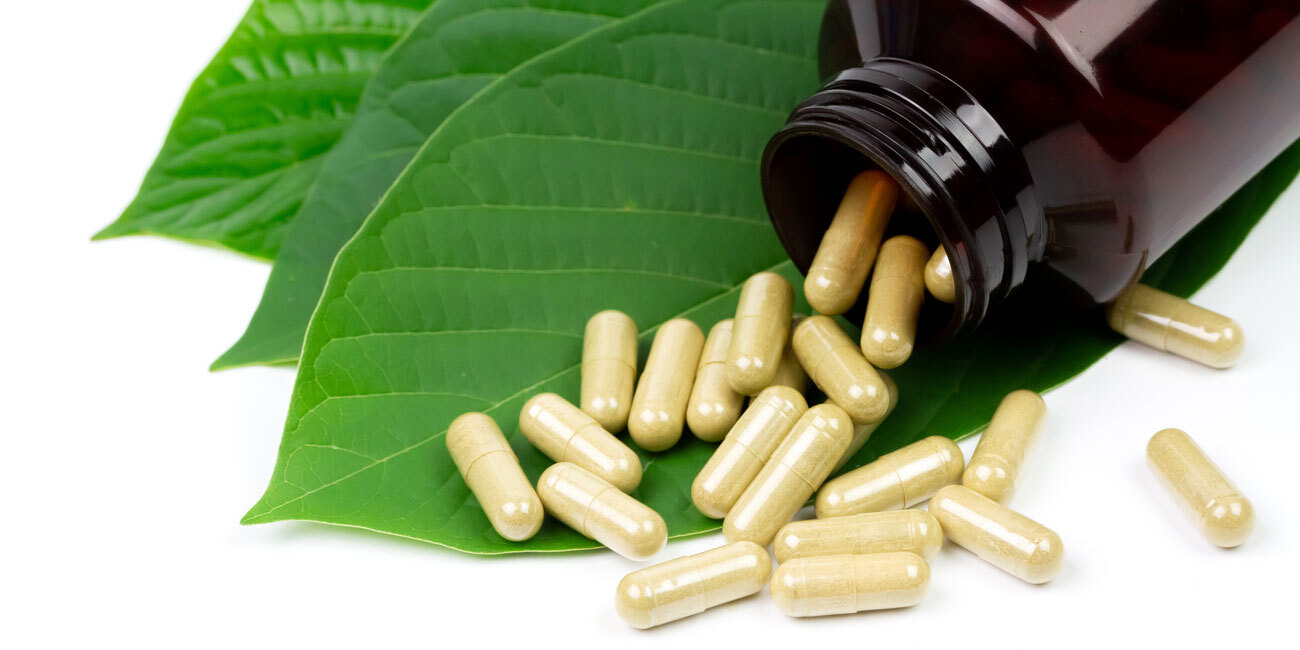
Kratom is a plant native to Southeast Asia whose leaves have traditionally been used for stimulant and pain-relieving effects. In recent years, concentrated products containing 7-hydroxymitragynine, commonly known as 7-OH, have become increasingly available in the United States. Health officials have raised concerns that these highly concentrated products can produce opioid-like effects and may pose greater risks than traditional kratom leaf products.
As part of the discussion, board members received informational material comparing concentrated synthetic 7-OH products with natural kratom leaf. The handout described concentrated 7-OH products as laboratory-made, highly concentrated substances often sold as tablets, gummies, or other novelty products, while distinguishing them from traditional natural leaf kratom sold in powder, tea, or capsule form.
Despite those distinctions, the draft regulation would prohibit both natural leaf kratom and synthetically derived kratom products.
The Board of Health is expected to continue discussing the proposal before taking action on whether to adopt the regulation.
24World Media does not take any responsibility of the information you see on this page. The content this page contains is from independent third-party content provider. If you have any concerns regarding the content, please free to write us here: contact@24worldmedia.com
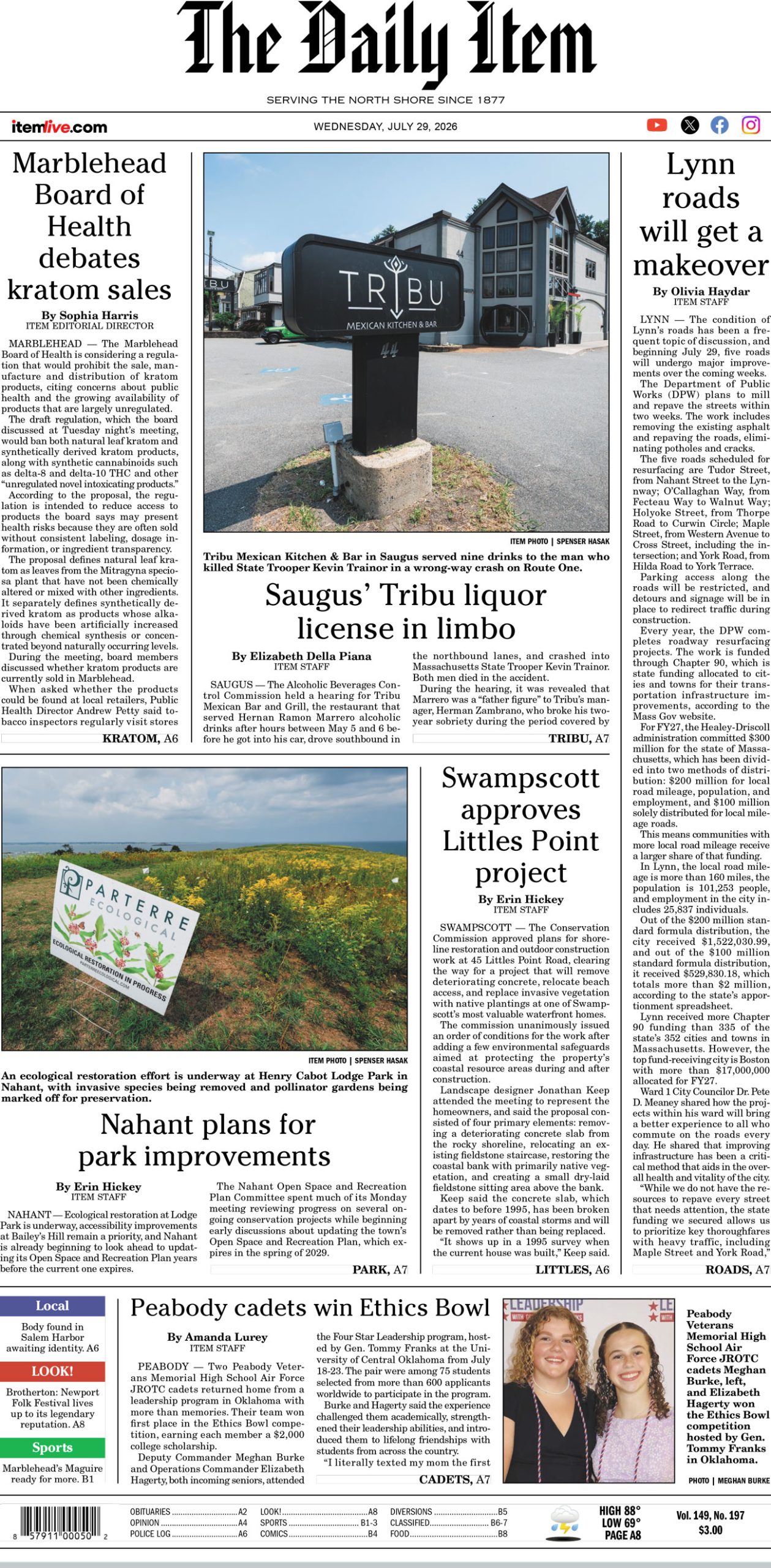
The post Today’s page 1: 7-29-26 appeared first on Itemlive. Source...

A historic Greenport shipyard advanced its bid Monday for county preservation money that would...
MARBLEHEAD — The Marblehead Board of Health is considering a regulation that would prohibit the sale,...

The post KING OF THE COURSE appeared first on Itemlive. Source...

LYNN — The condition of Lynn’s roads has been a frequent topic of discussion, and beginning July 29,...

NAHANT — Ecological restoration at Lodge Park is underway, accessibility improvements at Bailey’s...

Peabody cadets win Ethics Bowl

Peabody’s Family Fest returns to Emerson Park

Swampscott approves Littles Point project

Body found in Salem Harbor awaiting identity

67th Newport Folk Festival a hit
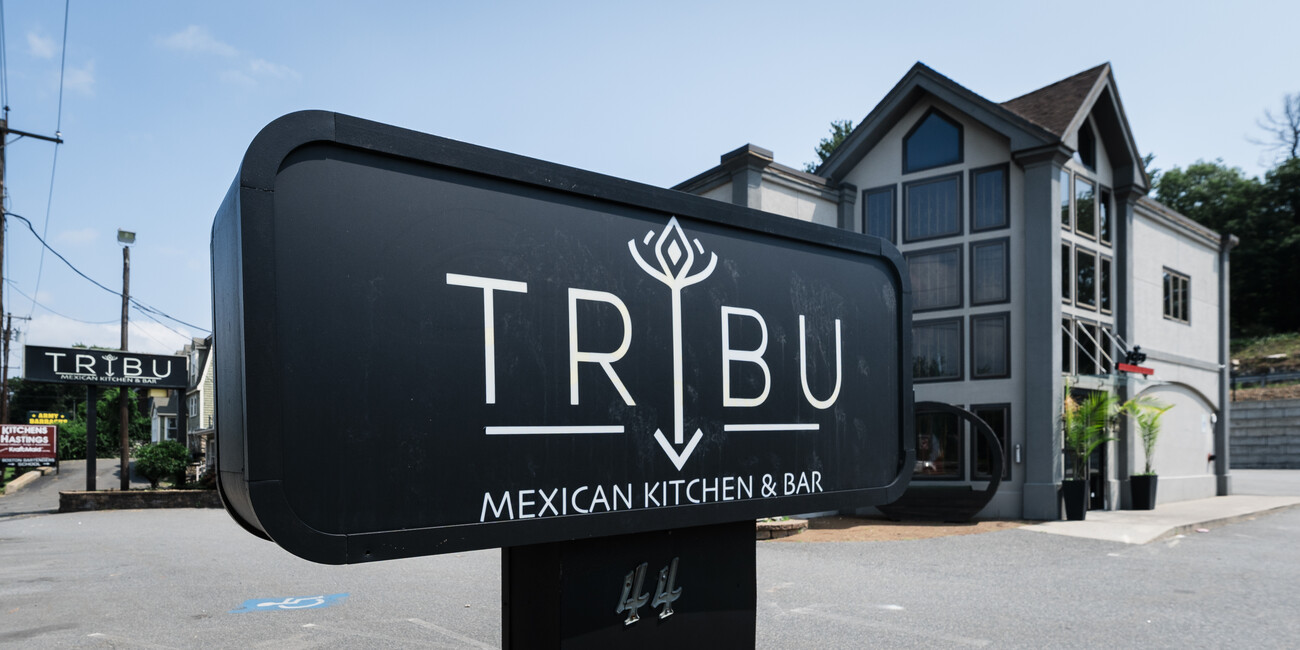
Saugus’ Tribu liquor license in limbo
Police Logs: July 27, 2026

Marblehead’s Maguire ready for more

Letter: Beccia’s record deserves a fair reading

Holly Sklar: America needs a raise

Team of the Week – Peabody football

Krause: Midseason trades are risky gambles