

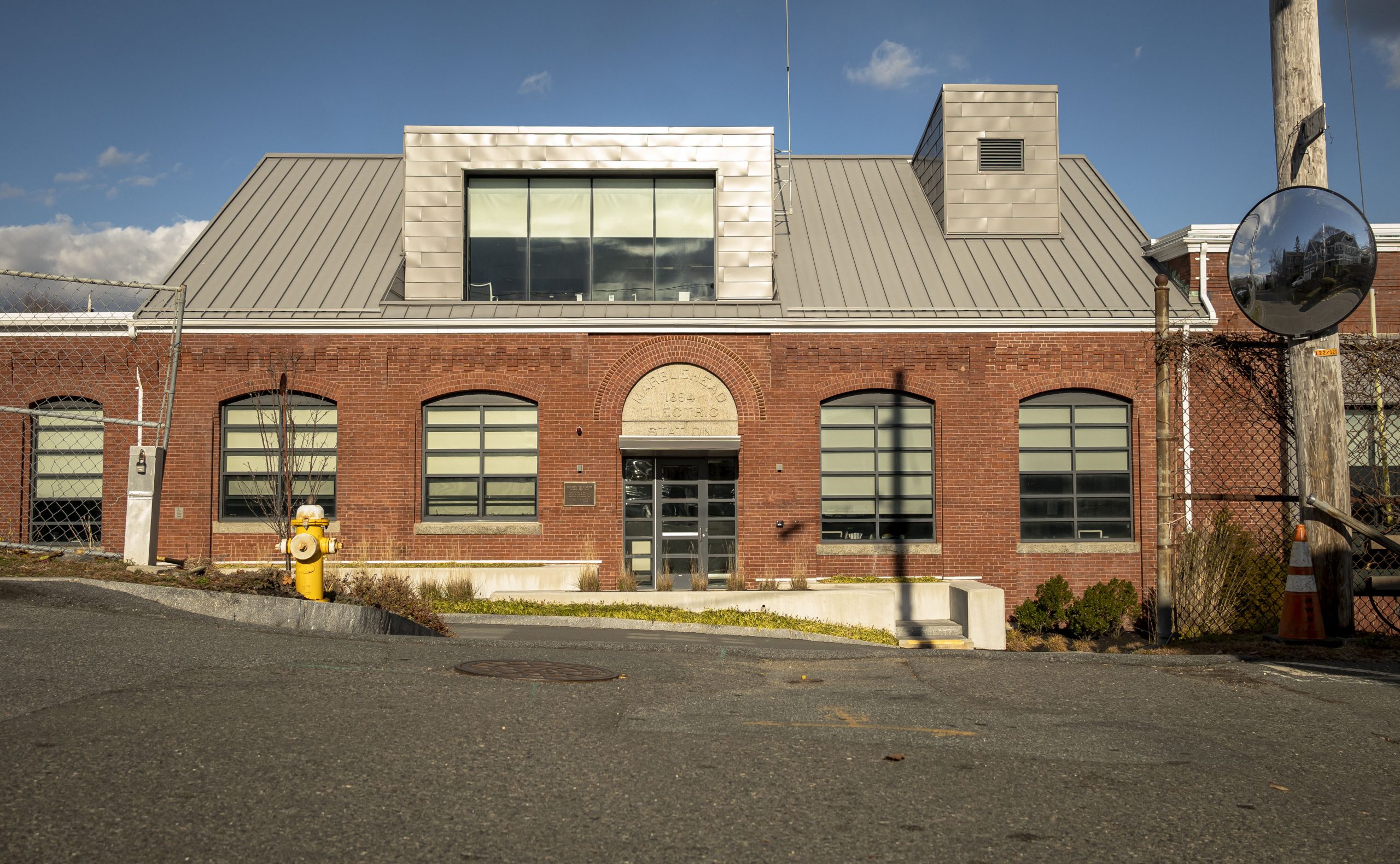
MARBLEHEAD — Marblehead residents could eventually pay different electric rates depending on the time of year as the Municipal Light Department explores a seasonal pricing model designed to better reflect the cost of providing electricity and ease the growing pressure on the electrical grid during the summer.
The proposal, presented by General Manager John Blair at this week’s Municipal Light Commission meeting, would slightly reduce electric rates during the fall, winter and spring while modestly increasing them during the summer months, when electricity demand and wholesale power costs are highest. Officials emphasized the concept would be revenue neutral, meaning it would not increase the department’s overall revenue but instead shift when customers pay more or less throughout the year.
Blair said the current rate structure charges customers the same electricity price regardless of when it is used, even though the cost to purchase power fluctuates significantly throughout the year.
“Our peak demand seems to be out of control, and our consumption is low,” Blair told commissioners, explaining that the department’s annual electricity sales have remained relatively flat while the cost of meeting peak summer demand continues to rise.
Under the concept, the seasonal difference would likely be modest, approximately one or two cents per kilowatt-hour. Additional revenue collected during the summer would be offset by lower rates during the remainder of the year.
Blair said the proposal could also encourage customers to shift some electric use into seasons when the town’s infrastructure has unused capacity. For example, increasing electric heating during the winter would place less strain on the local grid because the system is designed around much higher summer demand.
The discussion comes as the department prepares for hotter summers and increasing electrical demand.
Commission Chair Jean-Jacques Yarmoff highlighted climate data showing average temperatures in Boston have steadily increased over the past century, with recent years recording some of the warmest temperatures on record.
He also presented data indicating both the number and duration of heat waves have increased over time, arguing that the utility must continue preparing for more frequent periods of extreme heat.
Those trends became evident earlier this month when an extended heat wave pushed Marblehead’s electrical system near record demand and contributed to a widespread outage affecting customers on the Lafayette and Humphrey circuits.
Blair explained the outage occurred after the department proactively reconfigured part of its distribution system to reduce stress on the Clifton substation during the heat wave. The change exposed an undersized section of electrical conductor on the Lafayette circuit that failed under the unusually high electrical load.
Crews restored power to the Humphrey circuit in less than two hours, while repairs to the Lafayette circuit took about 10 hours with assistance from mutual aid crews from Braintree, Groveland, Littleton, and Kennebunk.
The incident, Blair said, reinforced the need for continued investment in Marblehead’s electrical infrastructure.
“It’s not good enough to just turn lights on when they go out,” he said. “We need to be out there and being more proactive at investing in the system and making sure that we’re finding problems before they find us.”
Commissioners generally supported continuing to explore seasonal rates but acknowledged the relatively small price difference would likely serve more as a signal to customers than dramatically change behavior.
“I see that more as an affordability issue rather than trying to change behavior,” Yarmoff said during the discussion.
No timeline has been established for implementing seasonal pricing, although Blair suggested any future proposal would likely be introduced before next summer and could begin with lower winter rates before transitioning to higher summer rates.
The commission also voted to formally support language in the state environmental bond bill that would appropriate $15 million for the planning, design, and construction of geothermal and thermal energy infrastructure. The funding would help municipalities develop thermal energy networks and other geothermal projects as Massachusetts works toward its 2050 net-zero emissions goals.
24World Media does not take any responsibility of the information you see on this page. The content this page contains is from independent third-party content provider. If you have any concerns regarding the content, please free to write us here: contact@24worldmedia.com
MARBLEHEAD — Marblehead residents could eventually pay different electric rates depending on the time...

LYNN — The Senior Center celebrated the expansion of its second floor with a ribbon-cutting ceremony...

Bridget and Eric Elkin always imagined starting a business for their daughters once they were old enough...

The post Today’s page 1: 7-31-26 appeared first on Itemlive. Source...

NAHANT — The band, Gypsy Electro, brought an eclectic mix of jazz, swing, rock ’ n ’ roll, and...

PEABODY — Bishop Fenwick was busy this week as 46 girls took part in the annual Heart and Hustle...

Lynn track series keeps gaining speed

Fun facts: A few of their favorite things – Will Bush

Police Logs: July 29, 2026
NSCC encourages apprenticeships – Itemlive

Commission aims for more female empowerment in Lynn

Saugus’ Kowloon goes coastal – Itemlive
State determined Lynnfield adhered to the law after racial incidents

Harboring community with an annual bike-a-thon

The photographer’s pics of the month: July

The dating recession – Itemlive
Swampscott nonprofit takes a lead on track fundraising
SCWA makes second bid to bring public water to 60 Mattituck homes