

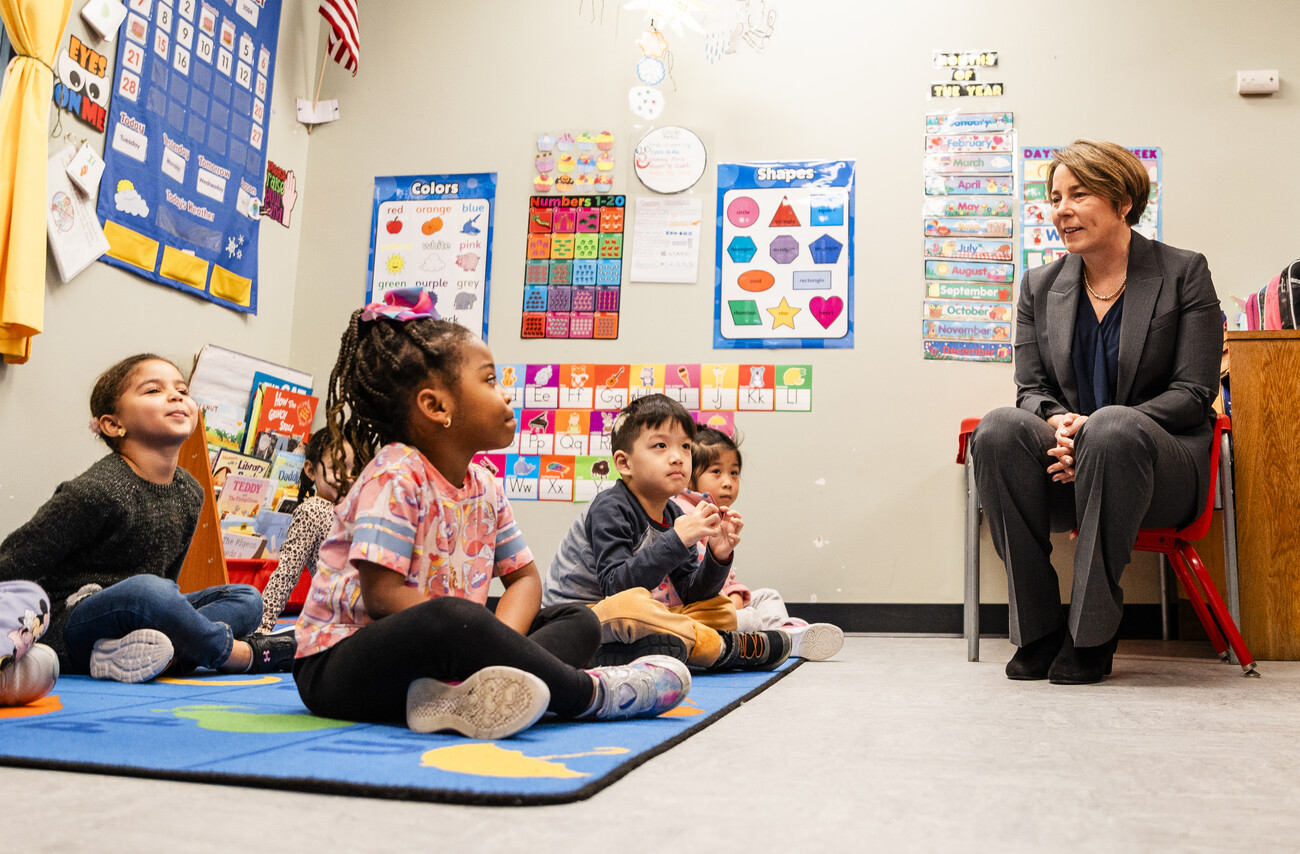
LYNN — Lynn Public Schools are set to receive $19.4k, with funding aimed at strengthening partnerships, expanding professional development, increasing family engagement, and improving financial planning tied to individualized education program (IEP) services in community-based preschool settings.
Earlier this week, the Healey-Driscoll Administration announced $250,000 in grants for 14 school districts to support early childhood special education planning.
“We know that the earlier we can provide services to our special-education students, the better the long-term results will be,” Superintendent Molly Cohen stated. “We appreciate the ongoing support and partnership with DESE and the Healey-Driscoll administration as we try to ensure equitable access to these services for all children in LPS.”
This investment comes after improving access to special education services in community-based early education settings emerged as one of the key themes from Gov. Maura Healey’s Early Education and Child Care Task Force listening sessions.
The funding reflects a broader effort to ensure that young children with disabilities are consistently receiving the services they are entitled to, regardless of where they are enrolled.
“Every child deserves access to the services and support they need to learn, grow, and succeed — and families shouldn’t have to struggle to access those services based on where their child is enrolled. We’ve heard clearly from parents and providers that delivering special education in community-based preschool settings can be a challenge,” Healey said.
The grant program: Building Early Childhood Teams: A Preschool Itinerant Team Initiative is being administered through the Department of Elementary and Secondary Education (DESE) in partnership with the Department of Early Education and Care (EEC).
It supports teams made up of school administrators, special education leaders, community-based preschool providers, educators, Early Intervention providers, and families. These teams will work together to plan for itinerant service delivery, bringing IEP services directly into community preschool environments.
“These grants will help schools and community partners work together to meet children where they are, expand access to critical services, and build a more inclusive early education system that supports all of our kids,” Healey added.
The initiative also includes in-person professional development, monthly coaching for participating teams, and opportunities to connect — both virtually and in person — with other communities that have successfully implemented similar models.
Lt. Gov. Kim Driscoll emphasized the practical impact of the funding on local communities.
“These grants are about making sure local teams have the tools and support they need to deliver for families,” she said. “By strengthening partnerships between school districts and community-based providers, we can bring services directly to where children are already learning and make it easier for families to access the care they need.”
State education leaders also pointed to the long-term benefits of investing in early childhood programs.
“Research finds consistently that access to high-quality pre-K leads to students needing fewer special education services and entering kindergarten more prepared,” Secretary of Education Steve Zrike said. “I am excited to see the impact this funding will have, supporting communities to care for young learners across educational settings.”
Elementary and Secondary Education Commissioner Pedro Martinez noted that the funding will help districts build stronger internal and external collaborations. “These districts will receive family engagement support, professional development, and assistance with establishing strong partnerships within their districts,” he said. “Through effective partnerships, teams will support delivery of IEP services in community-based preschool settings.”
The effort also aligns with broader state initiatives aimed at expanding access to high-quality early education.
“This investment strengthens our commitment to ensuring all young children can access inclusive, high-quality early learning in the settings where they thrive,” Early Education and Care Commissioner Amy Kershaw said.
“By investing in planning, professional development, and innovative service delivery models like itinerant teams, we are helping build a more responsive early education system that meets the diverse needs of all children and families across Massachusetts,” she added.
The grant program builds on the administration’s Commonwealth Preschool Partnership Initiative (CPPI), a central part of the “Gateway to Pre-K” agenda.
That initiative focuses on expanding affordable preschool access while ensuring that children with disabilities are fully included across all settings, with consistent access to required supports and fewer barriers to services.
24World Media does not take any responsibility of the information you see on this page. The content this page contains is from independent third-party content provider. If you have any concerns regarding the content, please free to write us here: contact@24worldmedia.com
Greenport native Joey Owens packed what he could fit in the car and drove west. The 24-year-old...
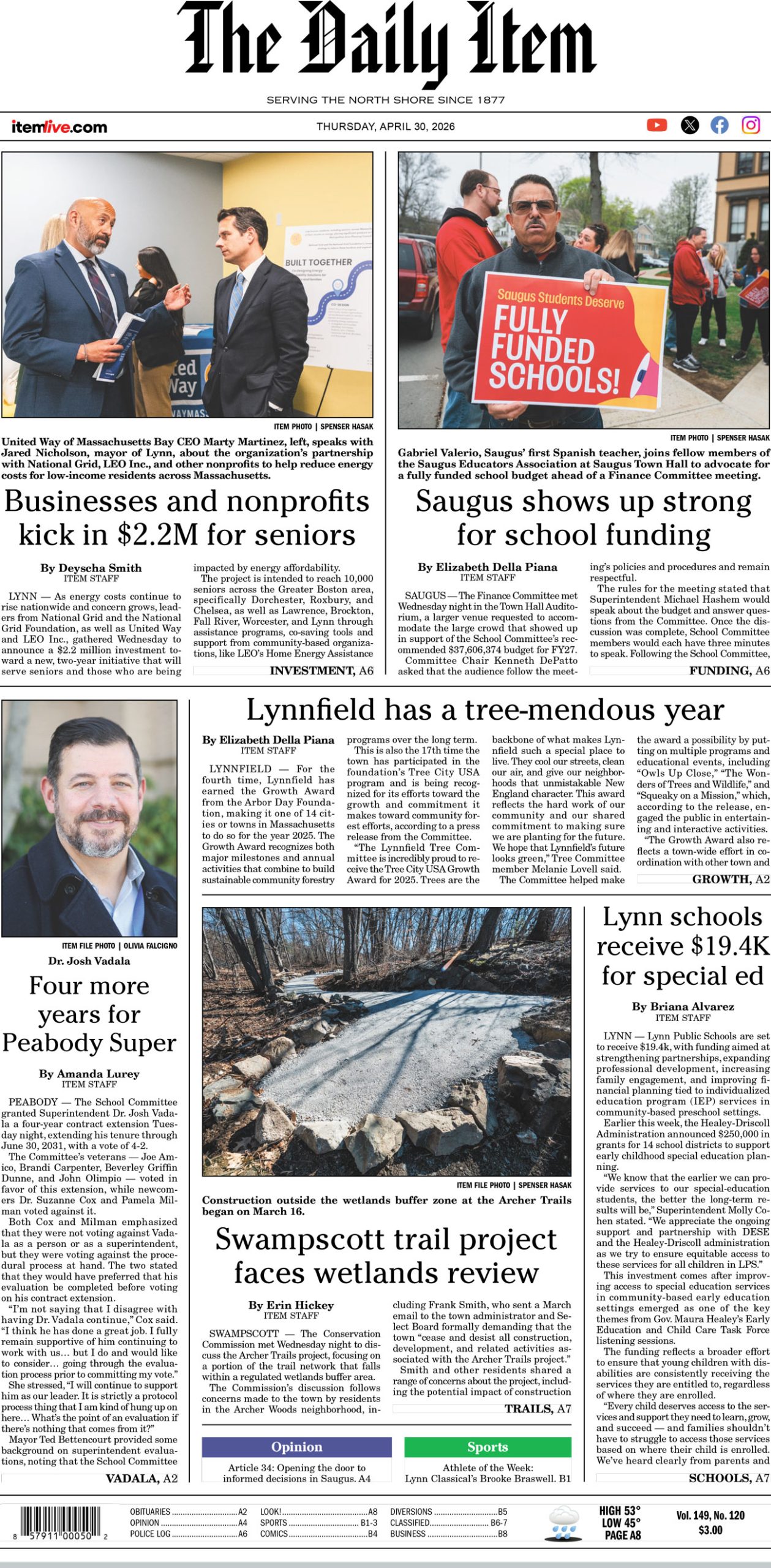
The post Today’s page 1: 4-30-26 appeared first on Itemlive. Source...
LYNN — Lynn Public Schools are set to receive $19.4k, with funding aimed at strengthening partnerships,...

Swampscott’s boys tennis team secured a 3-2 victory in Salem Wednesday — theatrics included. Victor...
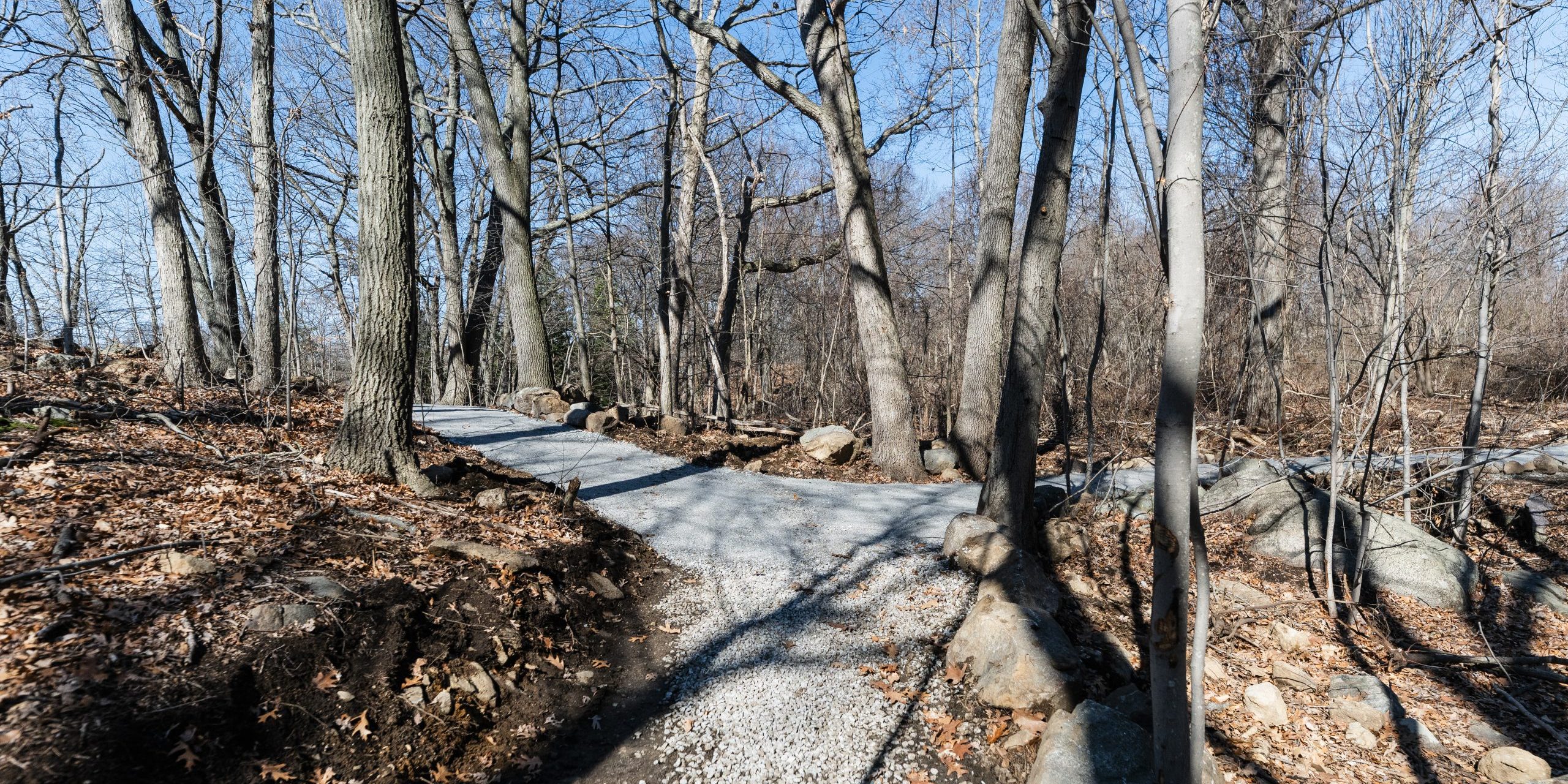
SWAMPSCOTT — The Conservation Commission met Wednesday night to discuss the Archer Trails project,...

All address information, particularly arrests, reflects police records. In the event of a perceived...
Saugus shows up strong for school funding
Lynn May Day Rally to mark 20 Years
Four more years for Peabody Super

LTTE: Opposition to Article 34 and landfill expansion urged

LTTE: Union backs override to prevent cuts

LTTE: Article 34: Opening the door to informed decisions in Saugus

Lynnfield has a tree-mendous year

Commentary: Demolition derby: The problem with the Kentucky Derby is Churchill Downs
Businesses and nonprofits kick in $2.2 million for seniors

Southold/Greenport girls track duo builds each other up

Athlete of the Week – Lynn Classical’s Brooke Braswell

New chef revamps Ram’s Head Inn menu with hyper-local, from-scratch focus