

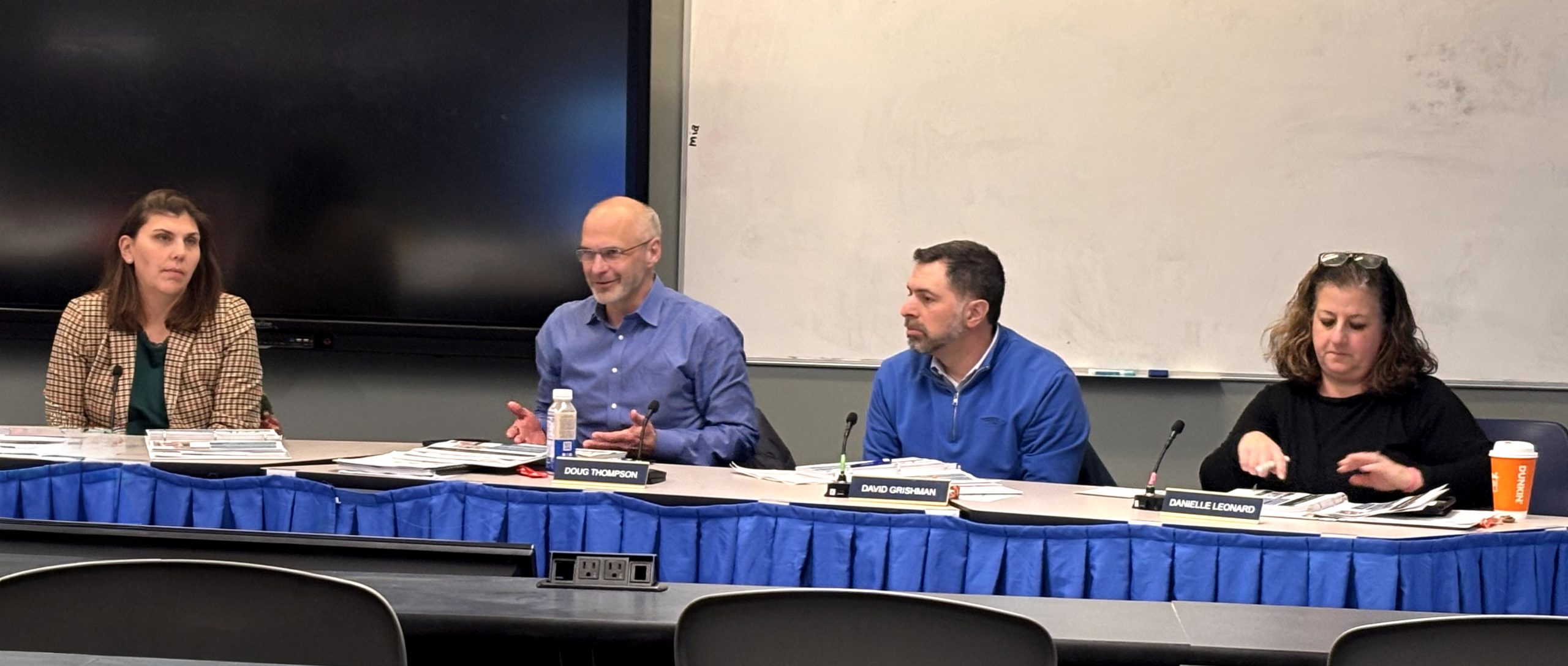
SWAMPSCOTT — After weeks of revisions, cuts, and recalculations, the Select Board is still searching for a finalized draft on the Town’s FY2027 budget — one that avoids asking voters for an operating override.
At a lengthy, and at times tense, meeting Wednesday night, Town officials presented an updated proposal that includes $703,000 in total reductions, with roughly $459,000 cut from the Town side and about $244,000 cut from the school department, alongside additional savings tied to health insurance projections shared by both areas.
Yet, even with those changes, several board members made clear they are not convinced that the plan goes far enough.
“I am not satisfied with where we’re at,” said Vice Chair Doug Thompson. “I think where we’re at is an unsustainable level.”
Other members of the Select Board were in agreement that the cuts are headed in the right direction but were wary that, without a long term strategy, the Town risks facing difficult decisions in the near future.
The center of the discussion was whether Swampscott could balance its budget in the coming years without turning to an operating override — an increase in property taxes that must be approved by voters under Massachusetts Prop 2 1/2 state law.
An operating override allows a community to permanently raise its tax levy above the state imposed cap to fund ongoing municipal expenses like schools, public safety, and Town services. While it can provide immediate financial relief, it also increases the tax burden on residents and would require strong local support to pass.
Board members repeatedly emphasized that going to voters for an override is something they hope to avoid, particularly with a potential future request coming for a costly middle school renovation.
“We’ve got to do everything we can to stay away from an operational override,” said Select Board member MaryEllen Fletcher. “Because when we go back to the taxpayer, we’ve got to be going back to get money for the middle school… If we’re going back for operational overrides, I feel pretty confident we’re going to put that at risk.”
Town Administrator Nick Connors said further reductions would be difficult, particularly alongside keeping Town services level, at the same level as previous years — which was a request of the Select Board. He noted that the current draft budget is a result of multiple rounds of review across Town departments.
“(The reductions) were not easy. They were difficult adjustments, both on the school side and on the Town side,” Connors said.
A significant portion of the discussion focused on the school department’s role in closing the gap. School officials reduced their requested increase from 3.96% to 3.25%, in part by drawing on previously saved funds in the Nahant Revolving Fund and by making targeted adjustments within their budget.
“We’re using all of our resources to make sure that we’re getting everything that we need, but not everything that we want,” Superintendent Jason Calichman said. “I’m confident that we can make it work and continue to produce a great product for the taxpayers in Swampscott and give the kids what they need.”
Fletcher asked for clarification on how the revolving fund was used, citing a $575,000 balance at the beginning of the 2025-2026 school year. Calichman said the balance of the revolving fund, which holds tuition payments from Nahant for students attending Swampscott schools, fluctuates throughout the year.
“At certain times, yes — it’s high,” Calichman said. “The payments come in installments… I believe three times a year… This number looks different for a lot of different reasons.”
The conversation repeatedly turned to getting through the next five years and how long the Town can continue balancing budgets before hitting a wall. Much of that timeline is tied to the Town’s pension obligations, which are currently in a higher cost “catch up” phase that is expected to wrap up by 2032.
Once that schedule is complete, annual payments to the pension fund will drop significantly, potentially freeing up millions of dollars in the operating budget. But that relief is still five years away.
Select Board members and Connors said that new growth would be a big piece and a great help in getting the budget to where it needs to be to avoid asking voters for an override — but the potential for that growth, namely in multi-unit housing developments, is limited by both space and construction time.
In the meantime, Connors said the Town is trying to plan conservatively.
“My projections will probably make it look worse than it will come out,” he said. “Because my goal is to make sure we are planning for the worst case and walk into a scenario that’s better than that.”
While much of the discussion focused on cutting expenses, some members urged the Town to more seriously explore new revenue streams, including fees for trash collection or metered-parking in high traffic areas — though some cautioned that such revenue sources can fluctuate and shouldn’t be relied on to balance the budget in the long term.
Ultimately, the Board signaled that the path forward will likely require a mix of both strategies: continued cost containment and new revenue, guided by a clearer multi-year financial plan, which they requested from Connors for a future meeting.
“We’re just trying to determine what this runway is,” Select Board member David Grishman said. “Otherwise we’re just guessing. We’re shooting in the dark.”
The Board made a procedural vote to move the draft forward so the Finance Committee could begin its review, with the caveat that they are still, as Fletcher put it, “not satisfied with this budget.”
As the review process continues, the goal remains to stabilize the Town’s finances without asking more of taxpayers.
24World Media does not take any responsibility of the information you see on this page. The content this page contains is from independent third-party content provider. If you have any concerns regarding the content, please free to write us here: contact@24worldmedia.com
SWAMPSCOTT — After weeks of revisions, cuts, and recalculations, the Select Board is still searching...

LYNN — For Christy Merryman, building community isn’t an abstract idea; it’s something she creates...

Barbara McQuade The Department of Justice in President Donald Trump’s second term has sometimes been...

Wine is often referred to as an art; for winemaker Robin Epperson-McCarthy, finding the opportunity to...

WIN Waste Innovations and Roca Inc. collaborated on a workforce development pilot program designed to...

There are a lot of rules in life. Well, maybe not rules exactly — more like obligations that stalk you...

LTTE: Gratitude to Lynn employees for winter efforts

Police Logs: March 18, 2026

LTTE: Why extending borrowing terms matters for Peabody’s new high school
Lynnfield responds to two-alarm residential fire
Officials state the case against rent control

North Fork at a crossroads as real estate market reshaped

Today’s page 1: 3-19-26

Saugus denies sign construction along brook

Police Logs 3/17/2026 – Itemlive
Teen charged in Lynn woman’s death
Affordable Housing Trust approves $200,000 for veterans housing

Lynn Auditorium receives $200,000 from state Gaming Mitigation Fund