

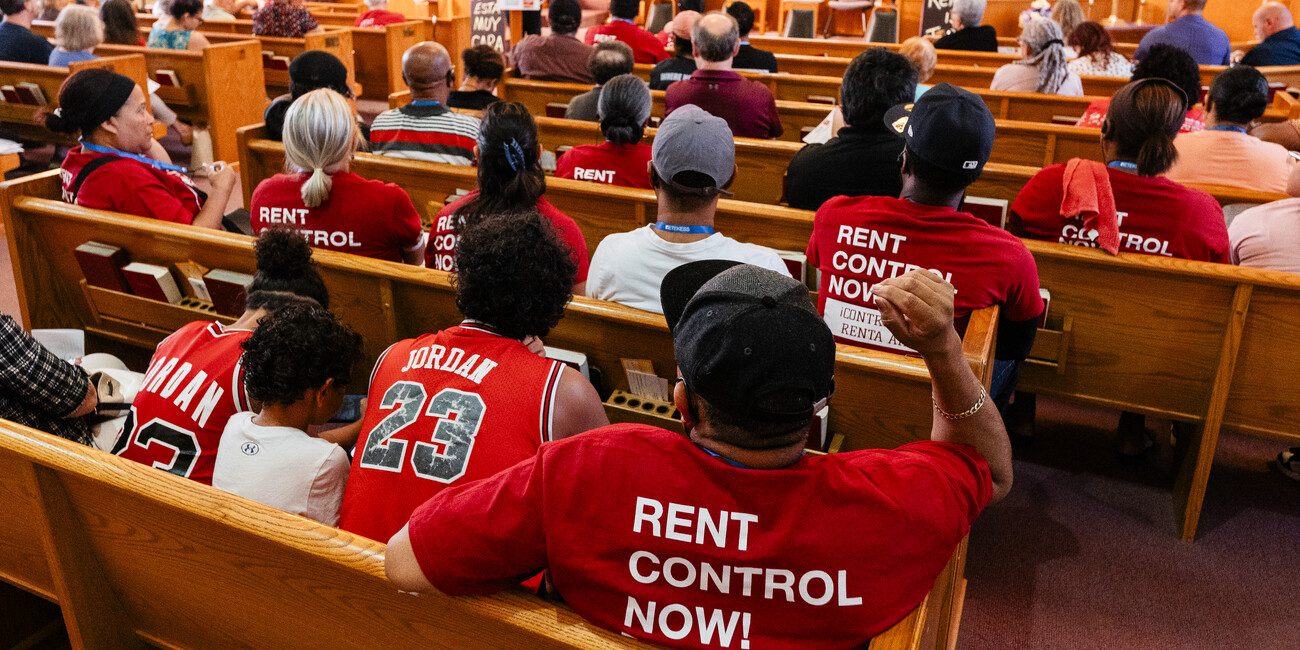
LYNN — The 2026 ballot initiative to stabilize rent will not be the solution to the housing crisis as many people believe it will be.
“The broad idea of rent control sounds good on its face, right? … The devil ultimately is in the details, and the wording of this (ballot) question makes it unfortunately impossible to renovate or create new housing in Massachusetts, and that will have long-term impacts on our housing here,” Conor Yunits, Chair of Massachusetts Housing, stated.
Gov. Maura Healey is also on the same side of this conversation, stating that rent control is “not going to be the solution” to the state’s housing crisis. She stated that, looking at the studies, production of homes will end because of rent control.
“I understand, maybe, the rationale, I guess. But I can tell you, it’s a terrible thing to do,” Healey said at a Greater Boston Chamber of Commerce Event. “It’s counterproductive to economic success and Massachusetts competitiveness.”
A study done by Evan Horowitz, the executive director of the Tufts center, shows voters the short- and long-term impacts to property values and property taxes for every municipality in Massachusetts and, more specifically, in Lynn.
In Lynn, 49.6% of housing units are rentals, meaning policies that cap rent could significantly affect property values and City revenue. Because an apartment’s building value is largely based on the income it generates, limiting rent can lower the property’s value.
The study also notes that since family homes in Massachusetts can be rented, those values could be affected as well.
Using this method, the study estimates property values in Lynn could fall 8.7% by 2029 and 17.4% by 2036. To offset the resulting loss in tax revenue, the City would either need to raise property taxes by about 21% over the next 10 years or make major cuts to services like teachers, police, and firefighters.
Why does this matter?
“The reality is that this proposal will make that (housing crisis) situation worse,” Yunits stated. “It’s not a 5% cap. It is a CPI (Consumer Price Index) cap which is generally closer to 2.5%.”
Yunits shared that from January 2025 to January 2026, the cap was 2.4%, meaning any rental increases would be limited to that percentage for property owners.
For example, someone may own a three-family home, and if the owner lived there, they would be exempt from the limit. But if they did not live there, they would not be exempt.
“The same would apply… if I own the condo that I rent out or a house that I rented out,” Yunits said, adding, “If my property taxes are going up 3%, my insurance is going up 10%, and my utilities are going up 10%… and those are all costs that we’re all facing, renters and owners alike, where do I get the money to reinvest in the property?”
Yunits expressed that rent control would not allow property owners to stay up to date with the upkeep it takes to properly care for a home.
“We had a tenant over on Newhall Street, and his rent was $675 a month, and the apartment needed audit work, right? So we did that,” Lynn landlord Gordy Hall shared. “We spent more than $100,000 renovating the unit. If this law were in place, we would change the locks and take the keys back to the office and hang them on a board.”
The three-story family home is going to eventually fall apart, and while it is important to continue renting out the spaces, rent control will not allow the property owner to invest on keeping the tenants home up to date.
“Lots of people in Lynn, for example, are rent burdened, lots of our tenants. We don’t like raising rents but… things go up, expenses increase, and we have to,” Hall added.
The decreasing turnover and vacancy comes from the lack of incentive to supply, potentially making it harder for Massachusetts residents to find a place to live or even move out for the first time.
“The other thing for current tenants is: Let’s say you’re living in a one bedroom, you’re open to growing families, (and) you want to move to a two bedroom,” Yunits explained. “Well, how are you wearing that? Because there’s nothing new being created, but also because in communities that have rent control, people stay in their units much, much longer. There’s much less turnover.”
He added, “What ends up happening is that in the experience when Massachusetts has this in the past proves (that) communities generally and slowly fall into disrepair.”
In 1970, Massachusetts allowed for Boston, Cambridge, Somerville, Brookline, and Lynn to adopt a strict rent control law. An MIT study done by Rolf Goetze showed that adopting rent control actually declined the amount of rental units between 8% and 12%.
“They’re not looking at the bigger picture of what’s going to happen to these areas, what’s going to happen to these individual buildings, and it’s going to be… a devastating effect. I don’t think I’m overstating it,” Lynn landlord John Gilbert said.
While rent control allows the opportunity for families or even individuals to stay in one place for a long period of time, it has damaging effects on housing qualities.
“This doesn’t just impact renters; it doesn’t just impact property owners,” Yunits said. “It impacts single-house property owners… community budgets; it impacts teachers. Everyone will be impacted by this.”
24World Media does not take any responsibility of the information you see on this page. The content this page contains is from independent third-party content provider. If you have any concerns regarding the content, please free to write us here: contact@24worldmedia.com

The post Today’s page 1: 3-20-26 appeared first on Itemlive. Source...

MARBLEHEAD — The Select Board unanimously approved a preliminary FY27 budget, which cuts 10 positions...

LYNN — The first week of spring sports is underway, and the Lynn Classical boys volleyball team is...

LYNNFIELD — It’s been nearly nine months since the Pioneers baseball team’s season came to a halt...

SWAMPSCOTT — After weeks of revisions, cuts, and recalculations, the Select Board is still searching...

LYNN — For Christy Merryman, building community isn’t an abstract idea; it’s something she creates...

Commentary: The DOJ isn’t enforcing the law. It’s protecting the president.

Local winery “Artist’s Series” takes flight once again

WIN, Roca combine on job training

Sophia Harris: Time to kill? Don’t kill it.

LTTE: Gratitude to Lynn employees for winter efforts

Police Logs: March 18, 2026

LTTE: Why extending borrowing terms matters for Peabody’s new high school
Lynnfield responds to two-alarm residential fire
Officials state the case against rent control

North Fork at a crossroads as real estate market reshaped

Today’s page 1: 3-19-26

Saugus denies sign construction along brook