


In one of the many memorable scenes from MGM’s classic movie, “The Wizard of Oz,” Dorothy goes to pick the fruit off an apple tree only to have her hand slapped — by the tree itself!
It seems that this tree does not take too kindly to having its apples picked. Angrily, the tree asks Dorothy, “How would you like to have someone come along and pick something off you?” Clearly this is no ordinary tree, but, then again, we’re in the land of Oz. The trees in our neighborhood don’t move in menacing ways, slap people, or, least of all, speak. And it’s safe to say our trees don’t think or sense things… or do they?
In her book, “The Light Eaters – How the Unseen World of Plant Intelligence Offers a New Understanding of Life on Earth,” award-winning Atlantic Magazine writer Zoe Schlanger explores the question of plant consciousness. Based on past and current research as well as her own observations, she explores the question of whether plants can sense their surroundings, process information, and make decisions in response to environmental stimuli — and also communicate with each other and other organisms.
Take the example Schlanger gives of the University of Washington researcher, David Rhoades, who studied the decimation of a nearby forest by tent-forming caterpillars in the 1980s. After several years, he noticed that suddenly things changed, and it was the caterpillars that began to die off. He found that the trees were actively defending themselves by altering the chemical contents of their leaves in a way that sickened the caterpillars. But what he found especially remarkable was that even the faraway trees that the caterpillars had not yet touched were changing the composition of their leaves. Apparently, they’d been forewarned.
While communication between trees through their roots had been established, these trees were too far apart to be passing information underground. Rhoades surmised that the caterpillar warning may be happening through airborne pheromonal substances that the infected trees were giving off — that is, the message was being sent through the air. While his idea was met with skepticism and ridicule at the time, it has since been taken up by others. Studies have shown that acacia trees release pheromones to warn other trees of grazing animals, and corn plants emit chemicals to attract parasitic wasps that prey on caterpillar pests.
If the trees in our neighborhood are saying anything, it’s a cry for help.
A recent report by the Canadian Journal of Forest Research concluded that trees in the Northeast are dying at increasing rates due to invasive pests, diseases, and climate-related stressors. These losses surpass those resulting from human activity, such as logging and development. Pests such as the emerald ash borer (Agrilus planipennis) and hemlock woolly adelgid (Adelges tsugae) are capable of removing an entire species in certain areas in just a matter of decades. Info on the emerald ash borer can be found at: swampscottma.gov/1558/Invasive-Emerald-Ash-Borer-FAQ.
Sadly, this is not a new story. In the early part of the last century, the Asian bark fungus (Cryphonectria parasitica) was introduced to North America and rapidly spread across the country. Within 40-50 years, it’s estimated that 3-4 billion chestnut trees — majestic trees that once dominated east coast forests — had died.
Likewise, the American elm (Ulmus americana) suffered widespread mortality from Dutch elm disease in the 20th century, spread by the invasive elm bark beetle (Scolytus spp).
Today, 19 states, including Massachusetts, have some degree of infestation of the spotted lanternfly (Lycorma delicatula). This invasive insect from Asia attacks our native plants and trees and have been sighted on the Northshore, including Lynn, Salem, and recently Swampscott. They suck the sap out of trees, weakening them and making them more susceptible to other pests and diseases. They also leave behind a sticky residue that is a breeding ground for black sooty mold. And if you think you’ve spotted a spotted lanternfly, you can report the sighting here: mass.gov/spotted-lanternfly.
While the studies in Schlanger’s book show that certain trees and plants have evolved to be able to resist particular pests through chemical means or symbiotic relationships, climate change is making trees’ overall defenses less effective. Rising temperatures and more frequent droughts can stress trees and make it harder for them to resist predatory insects or the invasion of pathogens.
How important are healthy trees to our local environment? Consider the mature oaks lining many of neighborhood streets as an example. In addition to sequestering carbon, providing shade, diminishing stormwater runoff, and beautifying our community, oak trees are major contributors to ecosystems. The ecologist Douglas W. Tallamy calls the oak “the king of deciduous trees” for its contribution to the food web. In his new book “The Nature of Oaks: The Rich Ecology of Our Most Essential Native Trees,” Tallamy reveals the essential role oak trees play in supporting biodiversity and explains how they sustain wildlife and healthy ecosystems. Watch a video: homegrownnationalpark.org/the-nature-of-oaks/.
Swampscott, like other North Shore communities, is blessed with canopies of mature trees, including oaks. However, in addition to the recent findings on tree loss by the Canadian Journal of Forest Research, two local studies by Salem State University students show that Swampscott suffered a net loss of 139 acres of tree canopy during the period 2010-2023.
All Massachusetts communities are required to have a Tree Warden, but recognizing the importance of tree canopies in providing healthy ecosystems as well as their natural cooling, carbon storage ability, and other benefits, many North Shore towns and cities, have established tree committees that oversee the planting, maintenance, and care of public trees.
Lynn had a Tree Committee to work with public officials to improve the health and management of the city’s urban forest and develop an Urban Forest Plan. However, as of February 2025, Lynn’s urban forestry program — and by extension its Tree Committee — is on indefinite hold due to the termination of federal funding.
A Massachusetts state program, run by the Department of Conservation & Recreation (DCR) and Bureau of Forest Fire Control and Foresty, partners with local communities to plant free trees in urban residential areas of designated “Gateway Cities,” which includes both Lynn and Salem.
Most municipalities also accept donations to help replace street trees either through a gift fund or memorial program. In celebration of Salem’s 400th anniversary, the city has instituted a Century Tree Program: a city-led initiative to plant tall, majestic trees at town-approved locations which residents can contribute toward through donations.
On the state level, an “Act Establishing the Municipal Reforestation Program,” which is designed to expand and protect the Commonwealth’s urban tree canopy, especially in communities of color and low-income neighborhoods, is currently pending Massachusetts legislative action. As the National Wildlife Fund points out, trees are needed in these communities “where residents often have less access to green space, higher pollution levels, and more exposure to heat and flooding, all of which trees can help mitigate.” See: nwf.org/Trees-for-Wildlife/Power-of-Trees/Trees-and-Environmental-Justice. A fact sheet on this proposed bill can be found at: masscommunitytrees.org/about-the-bill.
Unlike in the land of Oz, the trees in our neighborhood haven’t yet the ability to speak for themselves, so to paraphrase Dr. Suess’s Lorax, “We speak for the trees.”
Nature in the Neighborhood is a monthly feature provided by the Swampscott Conservancy and submitted by Conservancy President Tonia Bandrowicz.
24World Media does not take any responsibility of the information you see on this page. The content this page contains is from independent third-party content provider. If you have any concerns regarding the content, please free to write us here: contact@24worldmedia.com
In one of the many memorable scenes from MGM’s classic movie, “The Wizard of Oz,” Dorothy goes to...

To the editor: I am responding to an article in the July 30 edition of The Daily Item entitled “Mayor...

To the editor: Lynn is currently in a severe level 3 drought. Water conservation is a serious issue for...
To the editor: There are six good people still running in the Democratic primary for the 6th...
Southold Town officials began sketching out local ground rules Tuesday for responding to ICE activity on...
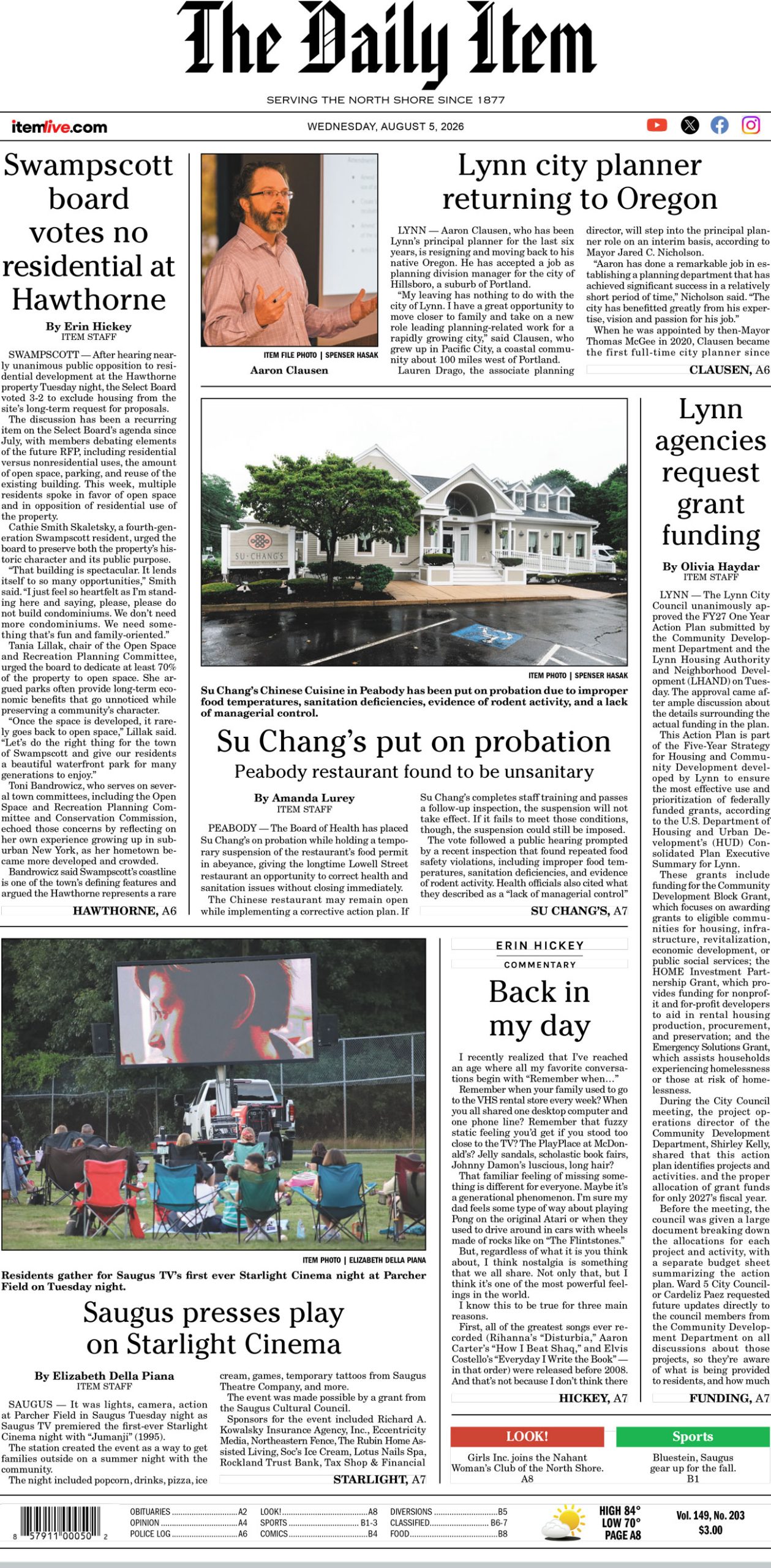
The post Today’s page 1: 8-5-26 appeared first on Itemlive. Source...
Swampscott board votes no residential at Hawthorne

Lynn agencies request grant funding
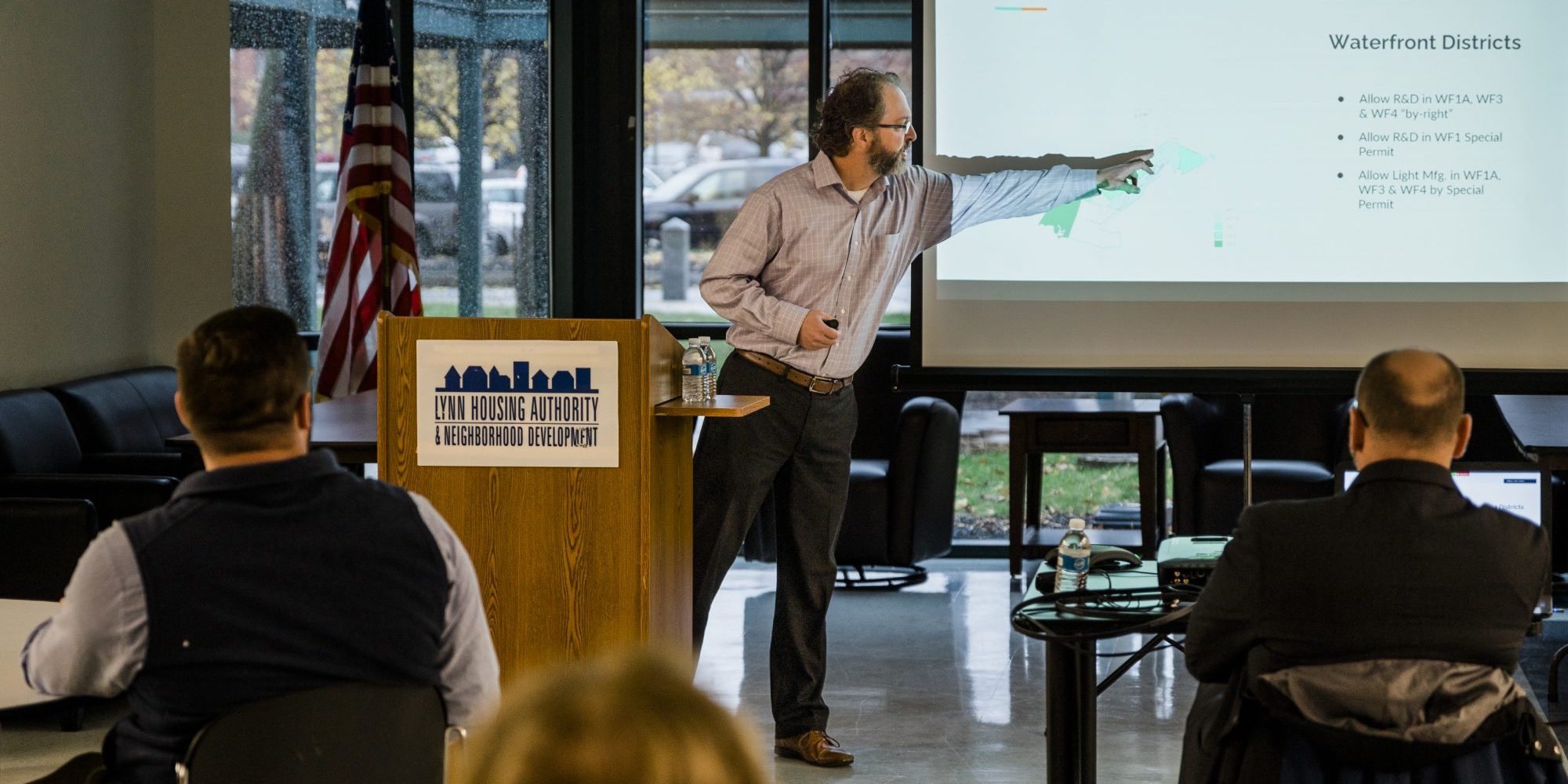
Lynn city planner returning to Oregon
Saugus presses play on Starlight Cinema
Su Chang’s put on probation
Girls Inc joins the Nahant Woman’s Club of the North Shore

Hickey: Back in my day
Locked and loaded in Lynnfield
Lynn Woods volunteers make it happen

Bluestein, Saugus gear up for the fall
Police Logs: Aug. 3, 2026

Commentary: Wildfires will only get worse until the US stops ignoring the climate crisis