


David M. Shribman
NATIONAL PERSPECTIVE
PARSONS, West Virginia — Under a canopy of red and sugar maple, yellow poplar, and sweet birch trees sits a colorful vernal riot of wildflowers like Canada violet, phlox, and Solomon’s seal — and a case study of a modern collision of two of the hardiest ideological perennials on the political landscape of America: conservation and conservatism.
Here, in a mountainous enclave of one of the most loyal MAGA states — but within living memory one of the sturdiest redoubts of Democratic rule — sits the Fernow Experimental Forest, created in the embryo years of the New Deal and over a span of nine decades an outdoor laboratory for the examination of forest management techniques, wildlife, soil science, and air quality.
With the future of research centers like this one thrown into uncertainty as the Trump administration pursues a clear-cutting policy in environmental-oriented research, this 4,615-acre reserve, where early 20th-century lumber barons once hacked out every tree in sight, is ground zero for testing whether a second-growth forest can flourish or survive second-growth conservatism.
When the forest lab faced possible extinction last year, a citizens’ coalition, Friends of the Fernow Experimental Forest, and a group of researchers worried that “critical experiments could end before we learn all they have to teach us,” mobilized to save it. This station is safe — for now.
The fear was that the effort to shut down climate change research would lead to shutting down forest research centers. “Fernow has been a fabulous source of research and a critical part of the Forest Service mission,” said Ashton Burdine, state director of the Conservation Fund.
Until recently, conservatism and conservation, sharing the same etymological roots, were complementary creeds.
The founding political father of the conservation movement was a Republican, Theodore Roosevelt, a sportsman and hunter who today surely would be an ardent supporter of Second Amendment gun rights.
He tramped the hills and virgin natural expanses from North Dakota’s Badlands to Louisiana’s wetlands; founded a party whose nickname was rooted in American wildlife folklore (“Bull Moose”); and in eight years in the White House beginning in 1901, established the National Forest Service, creating 150 national forests and 51 federal bird reserves, setting aside 230 million acres of public land. In the very years of the heaviest, most remorseless timber harvesting in this area, Roosevelt signed the 1906 American Antiquities Act, which now is in the rifle sights of President Donald Trump.
Only a half-century ago, Russel Kirk, considered a principal founder of modern conservatism, wrote, “There is nothing more conservative than conservation.” The conservative theorist and author of the influential 1953 book “The Conservative Mind” shaped the thinking of William F. Buckley Jr., who published him in The National Review, and Ronald Reagan, who in 1989 presented him with the Presidential Citizens Medal.
“What is a conservative after all but one who conserves, one who is committed to protecting and holding close the things by which we live?” Ronald Reagan asked in his 1984 speech marking the dedication of the new National Geographic Society building a few blocks from the White House. “We want to protect and conserve the land on which we live — our countryside, our rivers and mountains, our plains and meadows and forests. That is our patrimony. That is what we leave to our children. And our great moral responsibility is to leave it to them either as we found it or better than we found it.”
That theme is a direct descendant of the argument of what we might regard as the conservative case for conservation.
This notion, steeped in the conservative concept of fidelity to tradition, was best expressed by the foundational theorist of conservatism, Edmund Burke, who in 1790 wrote that society was a contract “between those who are living, those who are dead and those who are to be born” — a notion that creative-minded modern progressives might cite if they were determined to build a broad consensus for the environmentalism that is the direct descendant of the conservation movement.
And so any disruption of nearly a century of records and research on the natural world — including changes in plants, animals and streams — underlines the great contradictions and conundrums of conservatism involved in this environmental enclave 187 miles from the political world of the nation’s capital: What is the responsibility to preserve (a vital word in the language of conservatism) a record of change (a vital word in the language of liberalism)? This is a problem that confronted Roosevelt, who was a conservative who also was a progressive.
A related question for all ages: What is modern leadership’s responsibility not to disrupt what its predecessors created and themselves preserved?
These records endured in periods of prosperity and austerity, but, in a way, the future of the research center named for the Prussian-born forester Bernhard Fernow, who for a dozen years beginning in 1886 was the chief of the U.S. Division of Forestry, is less important for the destiny of this forest laboratory than it is for the meaning its survival holds for conservatism. (There was, after all, a disruption in operations during World War II before the research efforts resumed in 1948, a parallel to nature’s powerful recycling powers.)
The eight people who toil in the Fernow, as it sometimes is called here in the highlands of the central Appalachians, are less interested in political change than in examining long-term changes in the forest and how they affect endangered wildlife species, and how forest management techniques might evolve as the climate changes.
This is perhaps why sites and undertakings like this one, which has produced more than 1,200 scientific journal articles and government publications, are themselves endangered species in the middle years of the third decade of the century.
In a classic clash of ideology and scientific theory, Trump and many MAGA theorists consider climate change — only one of the phenomena being studied here — a hoax. This belief sometimes has required some logistical gymnastics, as the administration sets out to bolster military security in the Arctic to address the Russian and Chinese challenge due to melting iceways directly attributable to climate change.
The other day a swarm of eastern tiger swallowtail butterflies (Papilio glaucus) gathered just outside one of the equipment sheds of the Fernow Experimental Forest. From green eggs to brown-and-white caterpillars to yellow-winged butterflies with striped chevrons, they are living symbols of metamorphosis — the very process underway in American conservatism in the MAGA age.
A Swampscott High School Class of 1972 member, David M. Shribman is the Pulitzer Prize-winning former executive editor of the Pittsburgh Post-Gazette.
24World Media does not take any responsibility of the information you see on this page. The content this page contains is from independent third-party content provider. If you have any concerns regarding the content, please free to write us here: contact@24worldmedia.com
David M. Shribman NATIONAL PERSPECTIVE PARSONS, West Virginia — Under a canopy of red and sugar maple,...
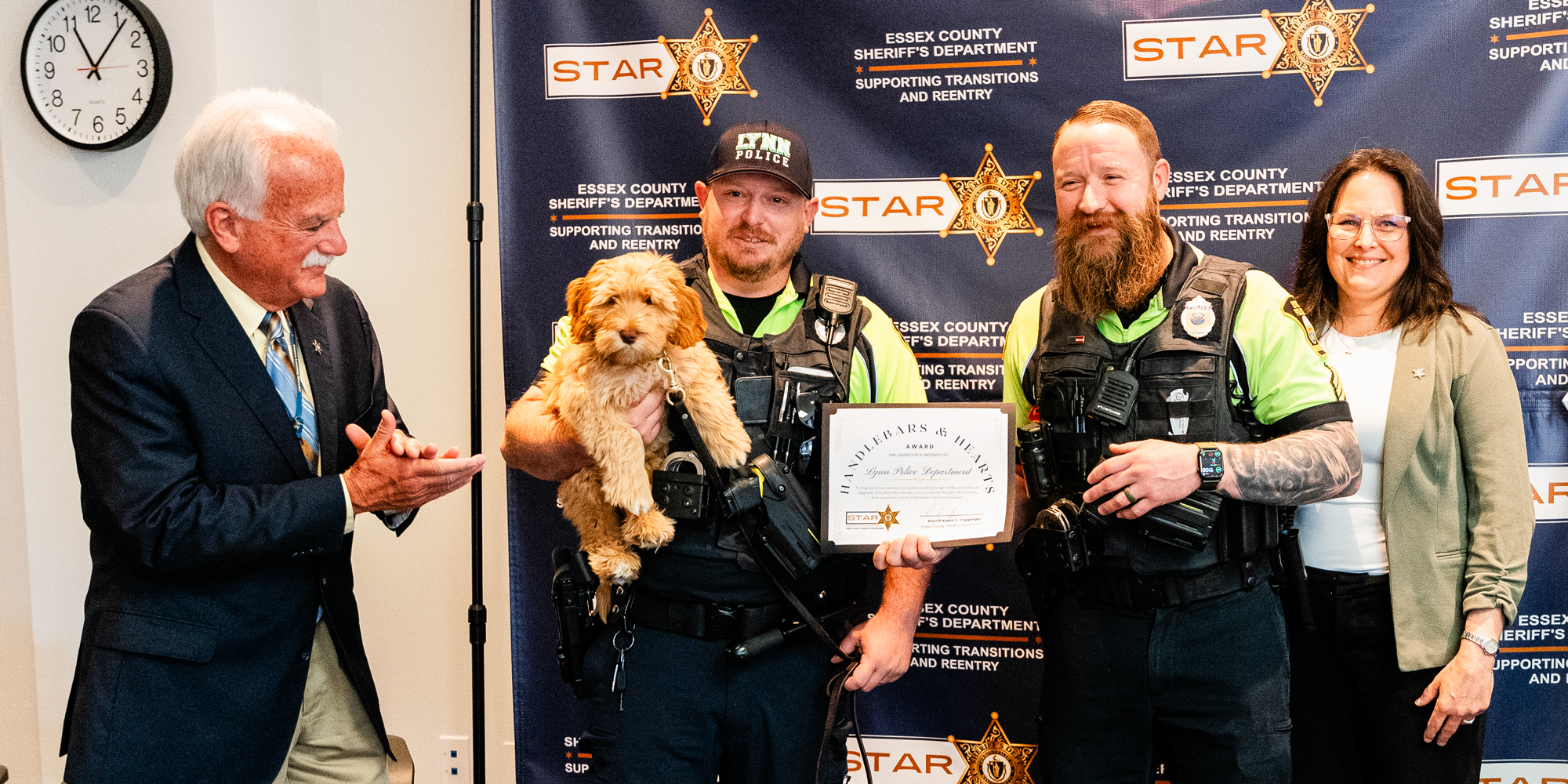
LYNN — Essex County Sheriff’s Department officials, community organizations, law enforcement...

NAHANT — As Nahant prepares for Saturday’s annual Town Meeting, members of the Select Board, as well...
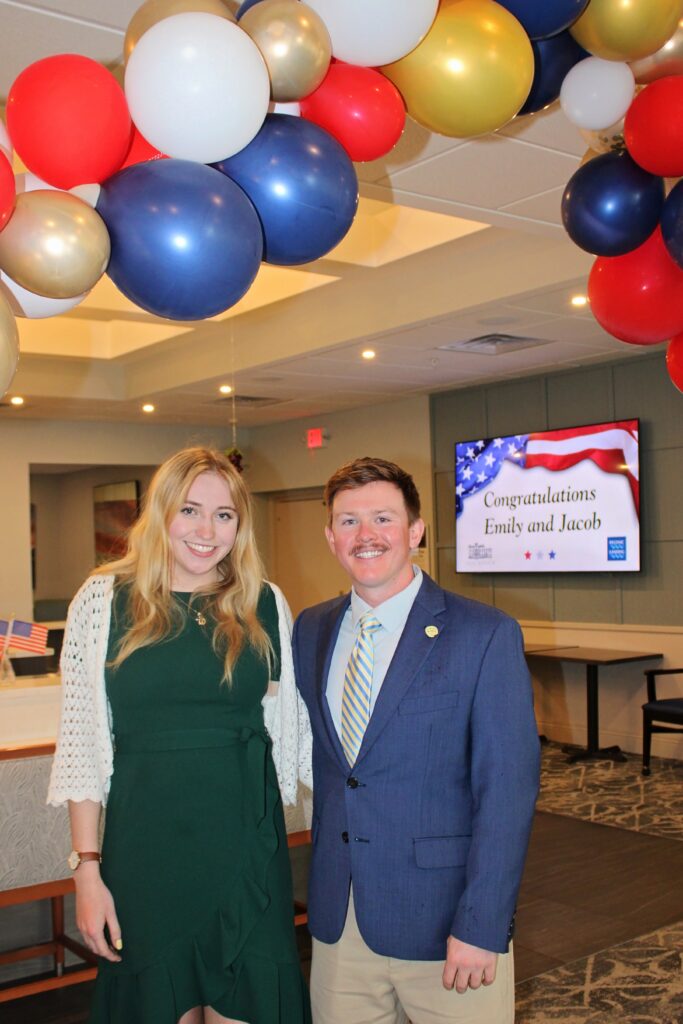
A Cutchogue couple will tie the knot for free in a lavish Greenport ceremony after being named the...
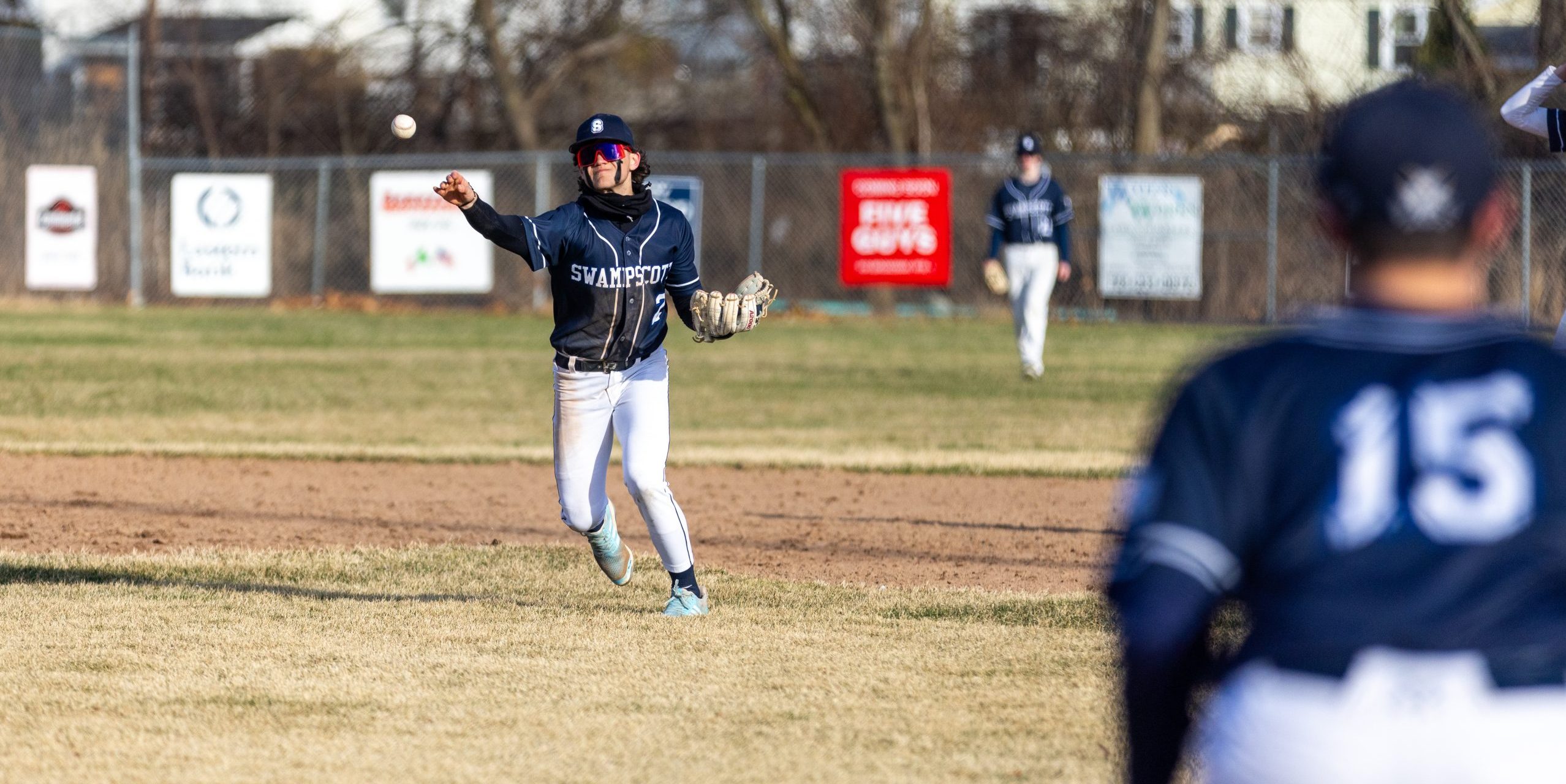
SWAMPSCOTT — Over the years, Swampscott senior Caden Ross has made noise across the North Shore with...

A day full of hands-on activity, history and lots of artisanal shopping is in store at Hallockville...

Construction advances on Pickering – Itemlive

Beyond Walls sweeps Northeast region at National Mural Awards

Roundup: Tournament-bound Tanners escape Medford
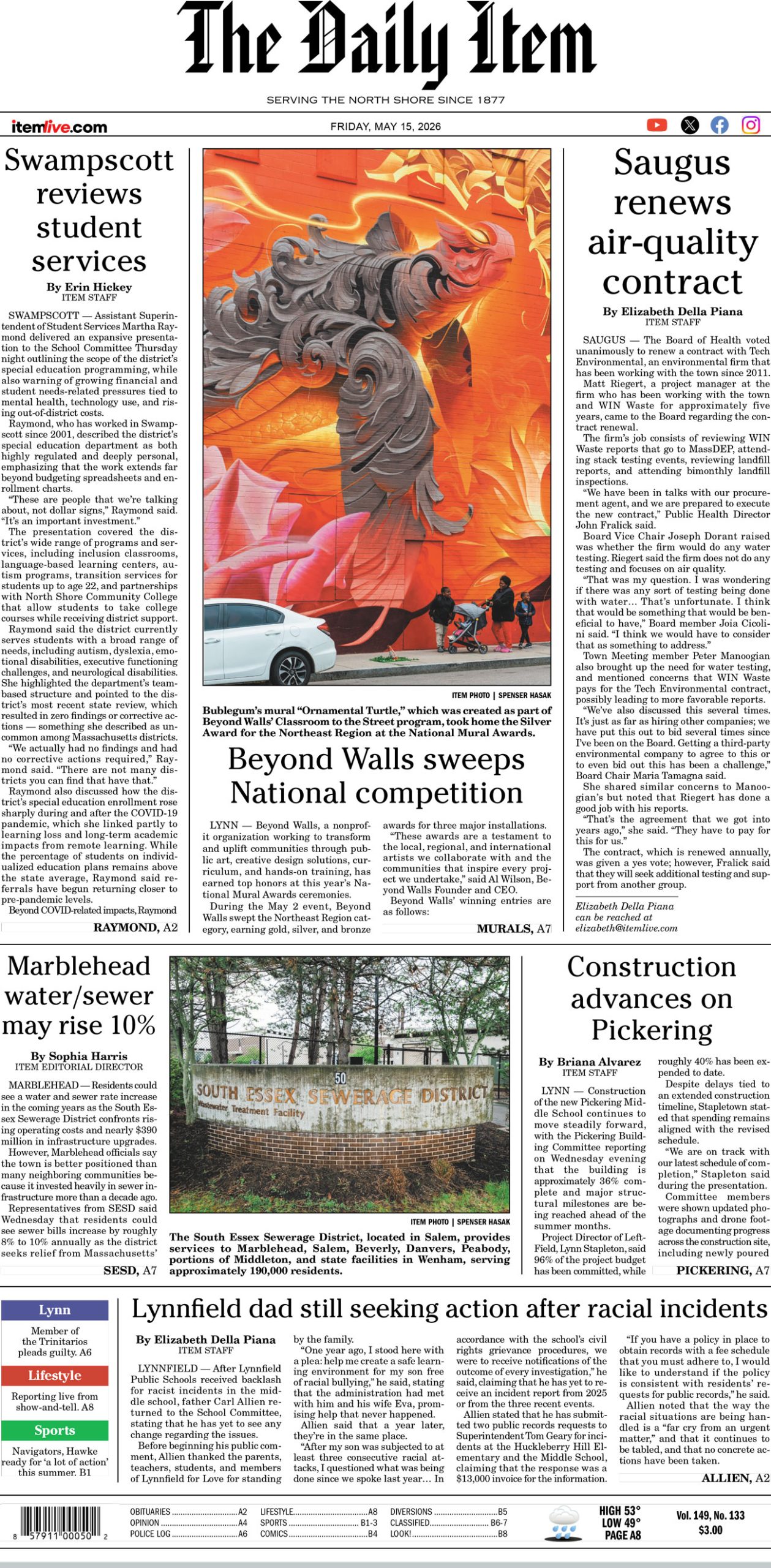
Today’s page 1: 5-15-26
Commentary: Automakers’ data monopoly and how they dictate car repair
Lynnfield dad still seeking action after racial incidents
Swampscott reviews student services – Itemlive

Commentary: Noah Kahan shows how common, and harmful, a delayed OCD diagnosis is

Reporting live from show-and-tell – Itemlive

Police Logs: May 13, 2026
Saugus renews air-quality contract – Itemlive

Lynn Chapter of the Trinitarios member pleads guilty to racketeering conspiracy